

Cell-Level Traceability: What Every QR Code Tells Us
How cell-level QR codes link incoming batch data, OCV/IR sorting bins, laser-welded busbar positions, and pack serial records for end-to-end industrial traceability.
When a battery pack is deployed in an autonomous mobile robot, agricultural drone, or backup power cabinet, tracking problems to a generic lot number is not enough. If one cell experiences premature degradation three years into field operation, engineering teams need to know exactly which factory line made that cell, what its initial internal resistance was, and which neighboring cells share that same production batch. Here is how cell-level 2D DataMatrix QR codes enable rigorous, component-level traceability in our pack manufacturing.
Each prismatic or cylindrical cell bears a laser-etched 2D DataMatrix code encoding the manufacturer identification, chemistry grade, production date, and individual serial index. During pack assembly, our automated scanners bind each cell's QR code to its exact spatial coordinate inside the pack and its initial OCV/IR test readings, creating an indelible lifetime digital genealogy for every finished pack.
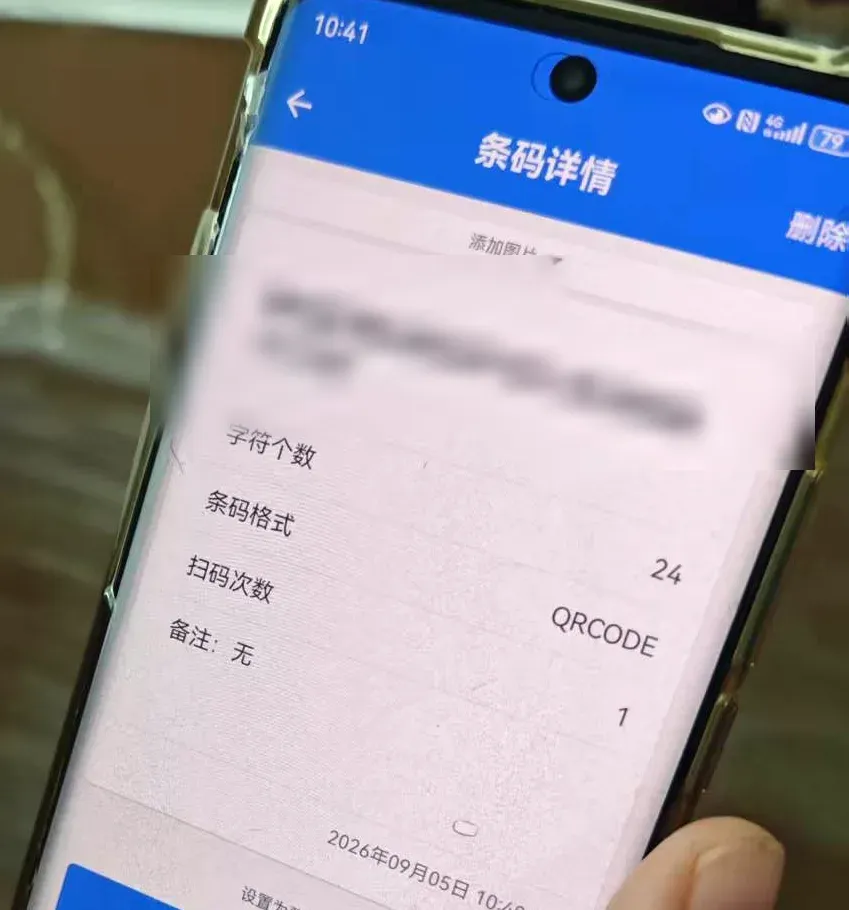
Cell-level QR code scanning during incoming receiving and matching validation (photographed in our facility, September 2026).
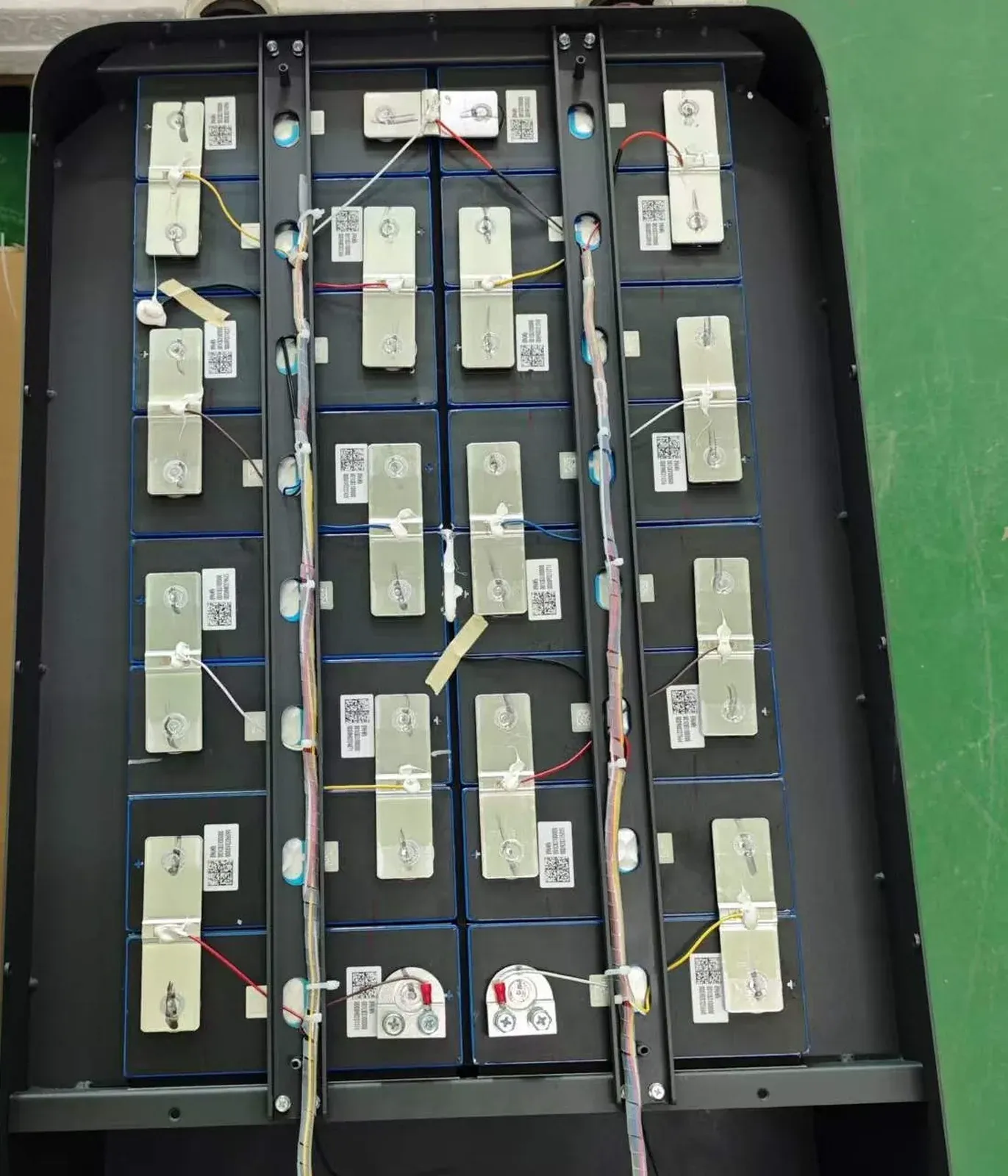
Laser-welded busbar assembly: cell QR codes remain permanently accessible for non-destructive visual and camera audit.
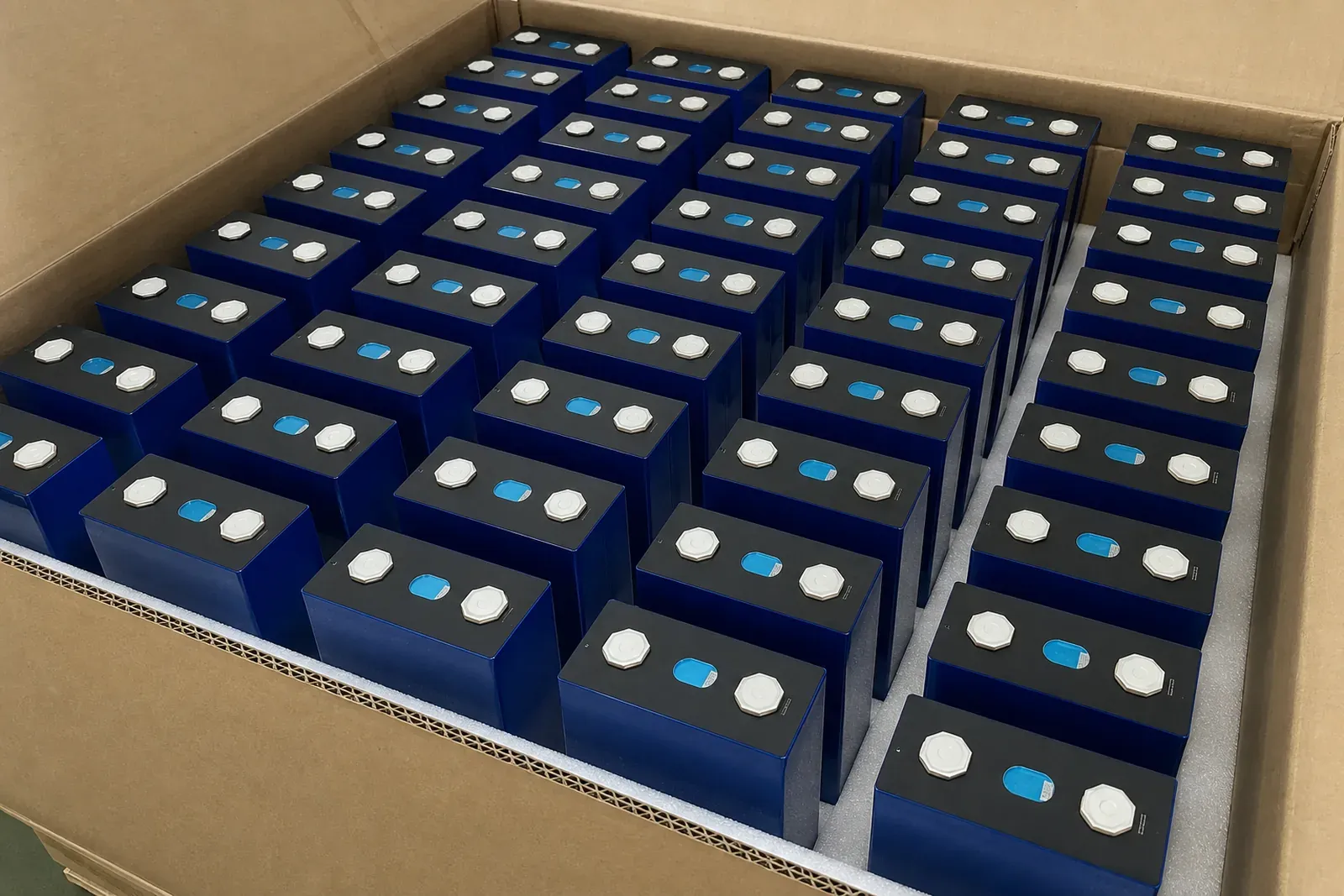
Incoming inspection: verified brand-name prismatic cells arrive organized in shock-absorbing trays ready for batch barcode intake.
1. The Risk of Black-Box Packs: Why Individual Traceability Is Vital
In low-cost assembly workshops, cells are often pooled into generic bins without recording individual identity. If a customer experiences field failure years later, the manufacturer has no record of which cells were assembled into that specific unit. Component-level traceability eliminates this ambiguity, turning maintenance from guesswork into precision engineering.
-
Pinpoints whether a field issue is localized to a single cell or a systematic batch defect
-
Protects clients against counterfeit, downgraded, or recycled raw cells
-
Provides transparent warranty resolution backed by timestamped production logs
-
Mandatory requirement for automotive, medical, and aerospace tier-1 supply chains
2. Decoding the 2D DataMatrix: What Information Is Etched
The standard 24-character DataMatrix code laser-engraved on the cell cap encapsulates essential manufacturing DNA. Scanning the code decodes standard parameters governed by national and international battery marking standards.
-
Manufacturer & Facility Code: Designating the specific OEM factory and cleanroom line
-
Chemistry and Form Factor: High-density NCM, long-life LiFePO4, or sodium-ion profile
-
Production Date & Shift: Precise calendar year, month, day, and work shift timestamp
-
Unique Cell Serial Index: A sequential serial number guaranteeing zero duplicates worldwide
3. Spatial Mapping: Binding QR Codes to Series-Parallel Coordinates
Scanning individual cells is useless unless the data is tied to pack geography. As cells are loaded into our structural fixtures, optical scanners log each barcode against its exact series-parallel coordinate (e.g., Cell #1 in Series Group 3). Concurrently, the station records initial OCV voltage, AC internal resistance, and weight.
-
Creates an exact CAD-like coordinate map of all internal cells
-
Binds initial OCV (mV) and IR (mΩ) sorting data to each physical position
-
Enables thermal camera readings to map directly to specific cell serial numbers
-
Stored in our MES database alongside the final finished battery pack serial barcode
4. Permanent Visibility: Why QR Codes Must Remain Accessible After Welding
A critical design flaw in poorly engineered battery packs is covering cell barcodes under wide busbars, foam insulation, or opaque potting compound. In our custom battery pack designs, busbar layouts are geometrically optimized so that laser-etched QR codes remain fully unobstructed even after high-power laser welding is completed.
-
Allows non-destructive barcode scanning during final pack inspection
-
Facilitates easy camera-based optical auditing without peeling protective busbars
-
Enables service technicians to read individual cell serials if repair is required
-
Supports compliant end-of-life battery recycling sorting without disassembly damage
5. Delivering Traceability Records to OEM & Robot Clients
For enterprise clients developing commercial robot fleets, UAV swarms, or distributed energy networks, our engineering team provides structured digital birth certificates alongside physical deliveries. This transparent data architecture reduces integration friction and accelerates end-system homologation. When two cell tiers share one module design, each tier still needs its own factory traceability before the sample is locked.
-
Optional CSV / JSON serial genealogy export for client fleet management systems
-
Documented proof that all cells meet Grade-A capacity and internal resistance specs
-
Simplifies field diagnostics: error logs identify the exact failing cell serial number
-
Reinforces trust with procurement and engineering auditors worldwide
Engineering Baseline
Cell traceability implementation checklist
Technical inputs recommended for engineering validation before final system architecture and quoting:
Scan incoming cell carton & verify batch manufacturer cert
Read 2D DataMatrix code & decode production timestamp
Record station OCV & IR readings to MES database
Assign cell to matching bin (grade delta within limits)
Bind cell QR code to mechanical coordinate in pack layout
Inspect busbar geometry to ensure QR visibility post-weld
Perform secondary optical scan after laser welding stage
Associate pack-level serial label with internal cell map
Related products and applications
Continue to the relevant product and engineering pages.
Quality Evidence Hub
Review the full quality gate spectrum from cell incoming sorting to final UN export crates.
Open Quality Evidence Hub →Custom PACK Process
See how cell matching, insulation barriers, and laser welding integrate into production.
Open Custom PACK Process →Custom Pack RFQ Checklist
Specify your project's traceability, protocol, and qualification requirements before quotation.
Open Custom Pack RFQ Checklist →FAQ
Cell-Level Traceability: What Every QR Code Tells Us | Staricell
Can the QR code be damaged or erased during pack assembly?
No. The DataMatrix code is laser-etched directly into the aluminum top cover of the cell by the cell manufacturer. It is impervious to cleaning solvents, industrial lubricants, and moderate thermal exposure. Furthermore, our busbar routing avoids running solder joints over the marking zone.
Do cylindrical cells (18650 / 21700) also feature QR code traceability?
Yes. Leading cell manufacturers now laser-etch micro-QR codes on the bottom negative pole or positive rim of premium cylindrical cells. For high-density packs, automated optical vision cameras scan and log these codes during high-speed cell feeder loading.
Why is QR code traceability important for robot battery applications?
Robots and AMRs undergo thousands of continuous duty cycles with frequent rapid acceleration spikes. If a cell develops internal micro-cracks or premature capacity fade, traceability allows engineering teams to identify whether other robots in the same deployment share cells from that specific raw material batch, enabling proactive preventive maintenance.
How does Staricell provide traceability records to buyers?
Traceability summaries can be provided as part of the formal Factory Acceptance Test (FAT) dossier or exported as digital batch records upon customer request. We retain all production barcode maps in our secure MES database for long-term auditability.