

Start with mission and weight limits
Drone battery selection starts from mission profile, MTOW, usable battery weight, and reserve energy before comparing pack chemistry or discharge routes.
Size the right UAV battery by flight time, payload, discharge needs, pack weight, connector, charger, and mission profile before requesting a quote.
Selection framework
Drone battery selection starts from mission profile, MTOW, usable battery weight, and reserve energy before comparing pack chemistry or discharge routes.
UAV battery sizing and calculation should include motor voltage (S-count), average current, peak discharge C, target endurance minutes, and payload changes that affect drone battery for payload and endurance decisions.
Battery for UAV applications differs by mapping, agriculture, cargo, FPV, and inspection duty cycles. Confirm current, endurance, charging window, and field constraints before choosing a product route.
Drone battery selection
Use UAV battery sizing and calculation to lock boundaries before comparing chemistry or product routes. This checklist stays on selection inputs, not manufacturer sourcing.
Confirm maximum takeoff weight and the usable battery weight limit so endurance and maneuverability are not overstated.
Confirm ESC and motor voltage window before locking series count and nominal pack voltage.
Separate average current from peak discharge C for climb, gust, or heavy-load events, including voltage sag and thermal rise.
Write the target flight time, energy reserve, and return margin before converting them into required pack energy.
Payload changes average current, so re-run drone battery for payload and endurance decisions whenever the mission load changes.
Battery for UAV applications should follow mission duty cycle. These are selection directions; final performance is confirmed against the approved specification and project validation.
Mapping / survey
Usually prioritize high-energy-density Li-ion or high-specific-energy routes. If solid-state or hybrid solid-liquid options are reviewed, mark validation status and size around flight time, weight, and reserve.
Agricultural / cargo
Often reviewed as high-discharge and opportunity-charge LiPo or high-discharge routes, with focus on payload current, thermal rise, charging window, quick swap, and field service.
FPV / training
Prioritize high-discharge response, weight, 6S / 12S compatibility, and connector fit, while sizing still covers peak current and thermal rise.
Next step after specs are defined
Already have your battery specs defined and need a reliable production partner? Check out our UAV battery pack manufacturer page for custom OEM manufacturing.
Open UAV battery pack manufacturer pageComplete the selection checklist and mission mapping before requesting a quote so the high-discharge, long-endurance, or industrial route can be judged clearly.
Applications
Related product options
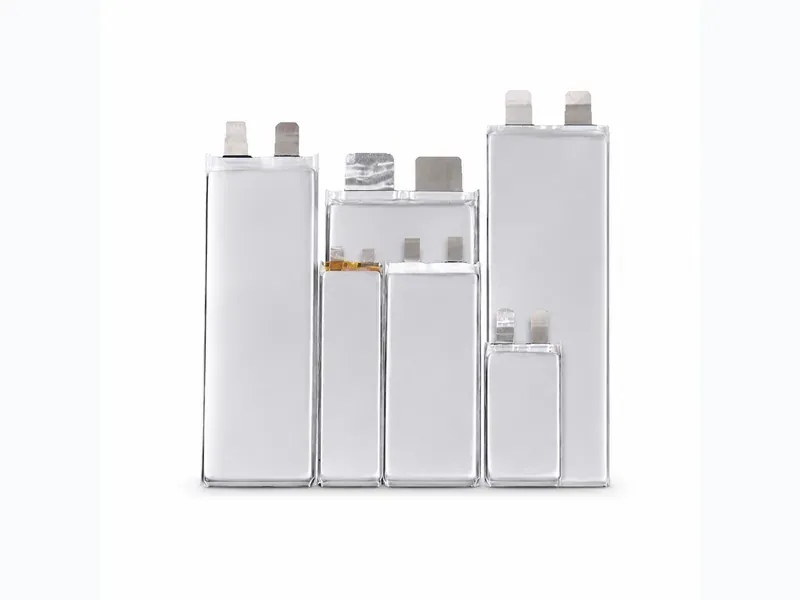
High-discharge polymer / LiPo cell supply for pack builders who need 25C-60C class discharge, compact pouch formats, thermal-rise review, and current-focused OEM design.
Key specs
3.7V / 4.2V / 4.45V class / About 1.5Ah-22Ah planning bands / 25C-60C by class / High-rate LiPo / polymer
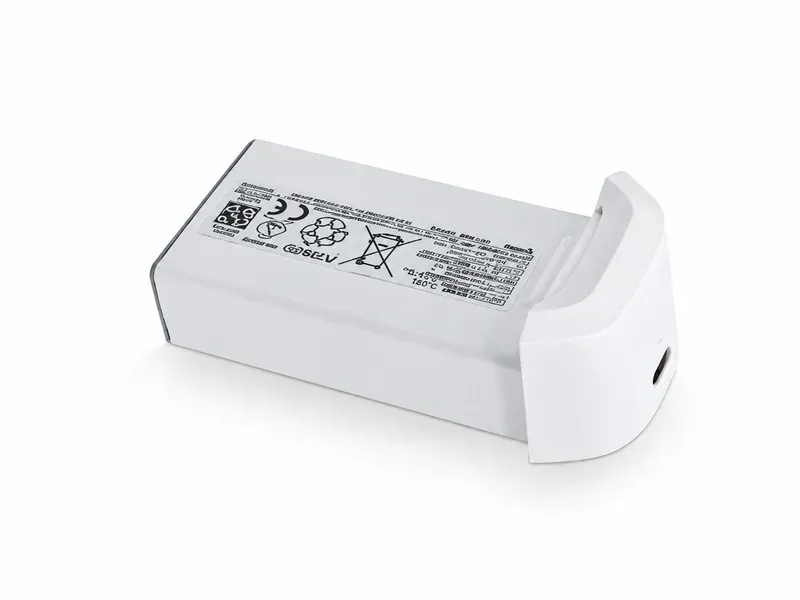
Compact 7.7V and 11.4V lithium battery pack route for consumer drones, training UAVs, and space-constrained aerial devices where weight, shell fit, and connector position matter more than extreme discharge.
Key specs
7.7V / 11.4V platforms / About 0.7Ah-4.5Ah planning bands / About 4C-10C reference class / Li-ion / polymer by platform
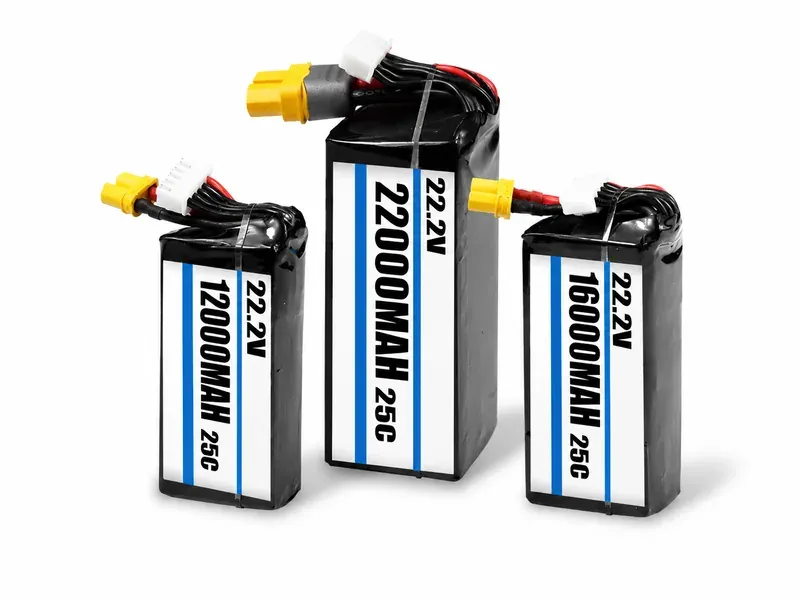
General high-rate LiPo pack route for training UAVs, RC models, and current-led 4S / 6S / 12S platforms that need pack-level continuous current, connector, wire-gauge, thermal, and charger review.
Key specs
4S / 6S / 22.2V examples / 1500mAh-25000mAh examples / Brochure cell examples; pack rating project-confirmed / High-rate LiPo / polymer
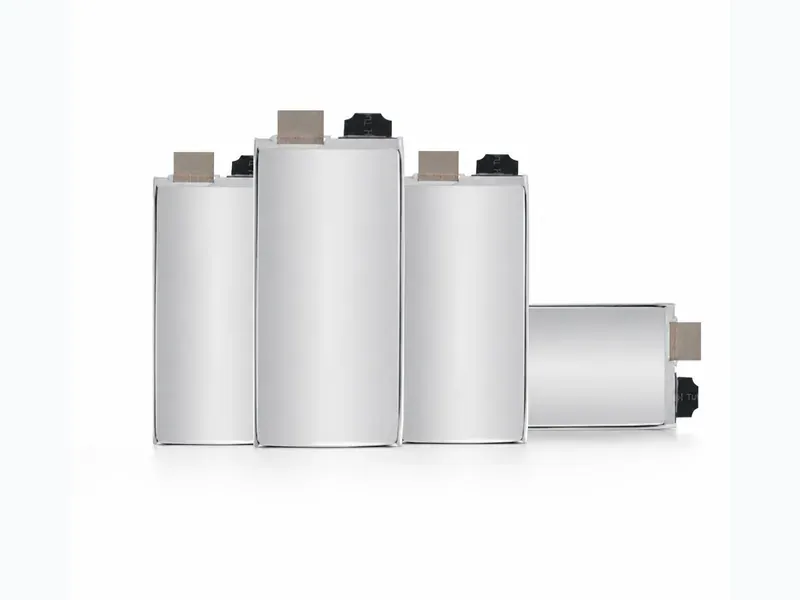
6S, 12S, and 14S hybrid solid-liquid UAV packs for long-endurance and payload-sensitive flight—system Wh/kg, pack weight, and connector integration prioritized over burst C-rate.
Key specs
22.2V / 44.4V / 51.8V examples / 16000mAh-35000mAh examples / 3C continuous / 5C short-time examples / Hybrid solid-liquid Li-ion
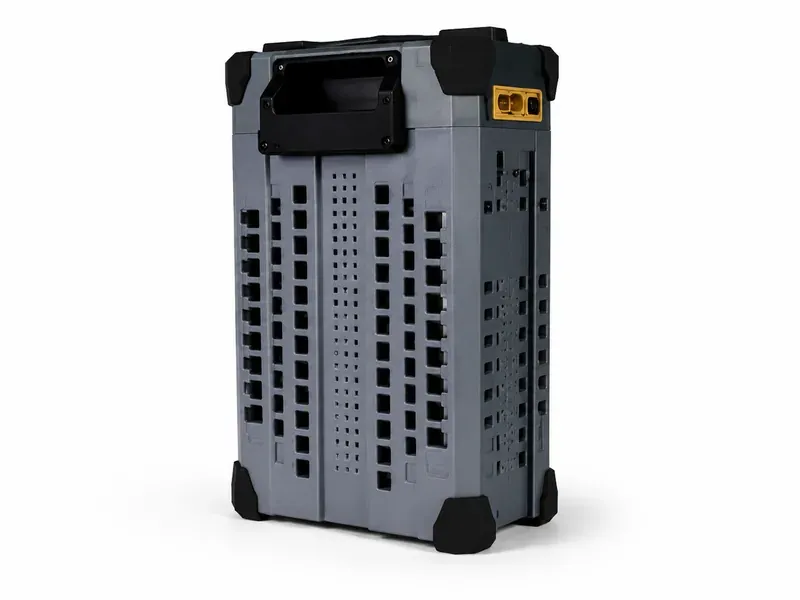
Industrial UAV battery pack route for inspection, logistics, agricultural, payload, and professional low-altitude platforms that need flight-time, weight, current, enclosure, quick-swap, charger, BMS, and field-validation review.
Key specs
44.4V / 45.6V / 52.22V / 52.78V examples / 12Ah / 14Ah / 20Ah / 45Ah examples / Brochure examples; final current project-confirmed / High-rate Li-ion / hybrid option
Related sourcing paths
Move here after sizing inputs are defined and you need a production or custom pack partner.
Open UAV Battery Pack Manufacturer →Use this guide to separate average load, peak events, and pack-level discharge rating during sizing.
Open Continuous vs Peak Current for UAV Batteries →Compare usable energy, payload, hover power, and reserve before locking endurance targets.
Open UAV Battery Weight vs Flight Time →Turn mission, current, envelope, and file requirements into a quotation-ready input list.
Open Custom Battery Pack RFQ Checklist →FAQ
Start with MTOW or maximum battery weight, motor voltage (S-count), average current, peak discharge, target endurance, payload, reserve, connector limits, and charging window. Separate continuous vs peak current with the UAV current guide, and weight vs flight time with the endurance guide under Resources.
Mapping and survey missions usually prioritize energy density and endurance. Agricultural and cargo missions often need higher discharge and opportunity-charge review. FPV and training prioritize high-discharge response and weight.
Higher payload usually raises average current and reduces endurance for the same pack. Re-run UAV battery sizing and calculation whenever payload, hover power, or reserve requirements change.
After the selection checklist and sizing inputs are defined, open the UAV battery pack manufacturer page to review production routes, custom pack options, and quotation requirements. Use the RFQ checklist guide when voltage and capacity alone are not enough to quote.
Global delivery and project documentation
Staricell plans cell supply, pack engineering, BMS integration, test records, and shipment documents around each shipping country, application duty cycle, certification target, and production schedule.
Cell supply, pack engineering, BMS integration, production testing, and export documents are planned around each buyer's shipping country, application, and volume schedule.
Project files can cover UN38.3, MSDS / SDS, shipment labels, test summaries, and documentation paths for CE, IEC, UL, RoHS / REACH, and other requirements.
Operating temperature, continuous / peak current, enclosure protection, connectors, chargers, communication interfaces, and field-service needs are reviewed before mass production.
Cell batch data, matching records, BMS settings, inspection results, and aging summaries can be aligned before sampling or pilot production.
Project quote
UAV battery selection & sizing for FPV, mapping, and payload missions. Calculate flight time, peak C-rate, and weight trade-offs before requesting a custom RFQ.