

ESS Battery 48V vs 51.2V
A comprehensive technical comparison between 48V (15S) and 51.2V (16S) LiFePO4 energy storage systems, covering inverter operating voltage windows, usable kWh energy delivery, BMS communication protocols, and parallel expansion architectures.
48V and 51.2V are standard LiFePO4 ESS platform options for server rack and wall-mounted installations, differing primarily in their cell series configuration (15S vs. 16S). Selecting between them requires precisely matching the host PCS/inverter voltage windows, multi-pack paralleling limits, and BMS telemetry protocols.
Determine the platform primarily by the inverter/UPS DC voltage envelope: 15S (48V nominal, ~42.0V–54.75V) matches legacy telecom rectifiers and narrow-voltage converters, whereas 16S (51.2V nominal, ~44.8V–58.4V) is the modern standard delivering ~6.7% more usable energy for solar ESS inverters. Always verify the maximum charging voltage limit and CAN/RS485 protocol compatibility before finalizing your BOM.
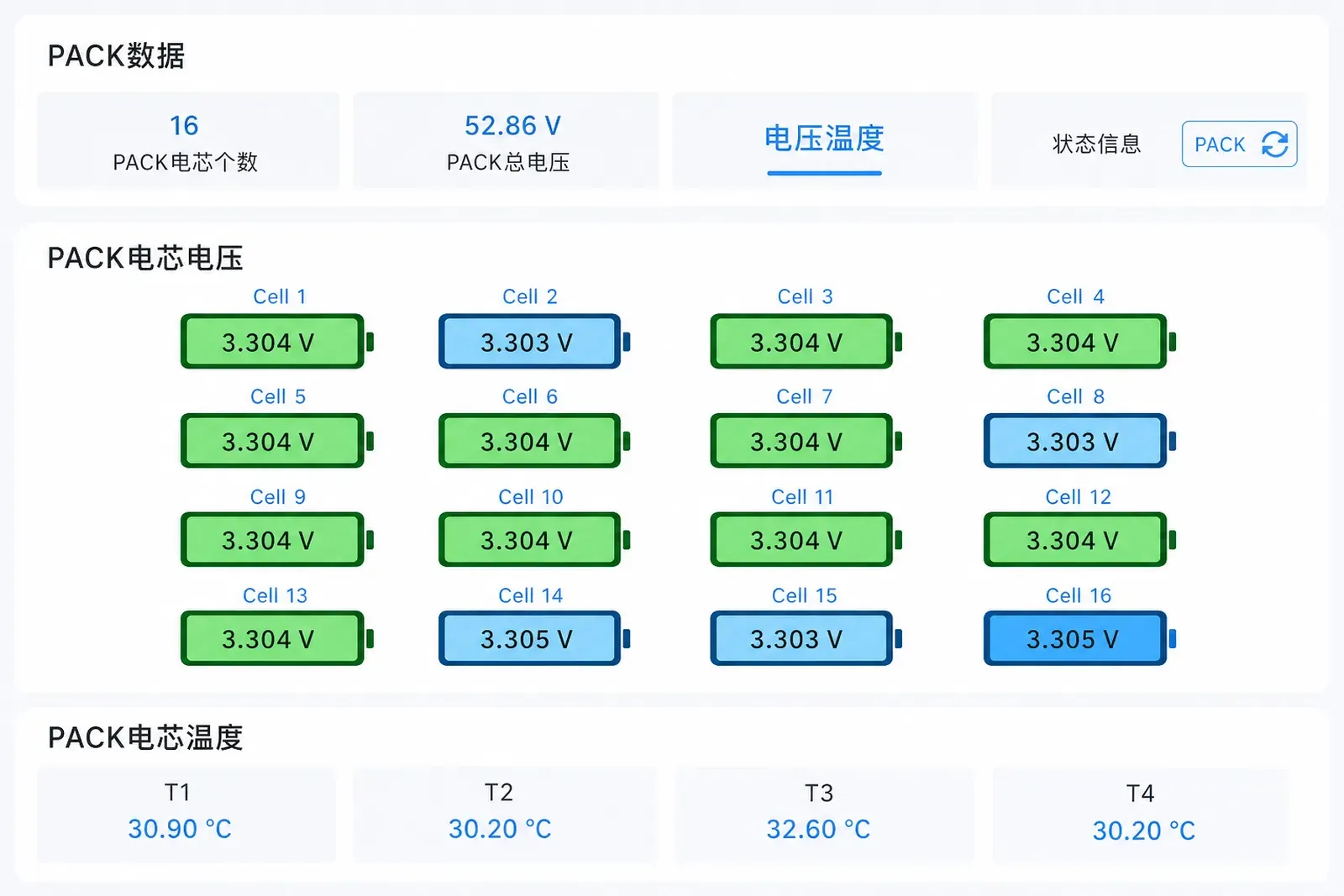
16-series LiFePO4 cell voltage telemetry (51.2V nominal platform) demonstrating cell delta within 2mV.
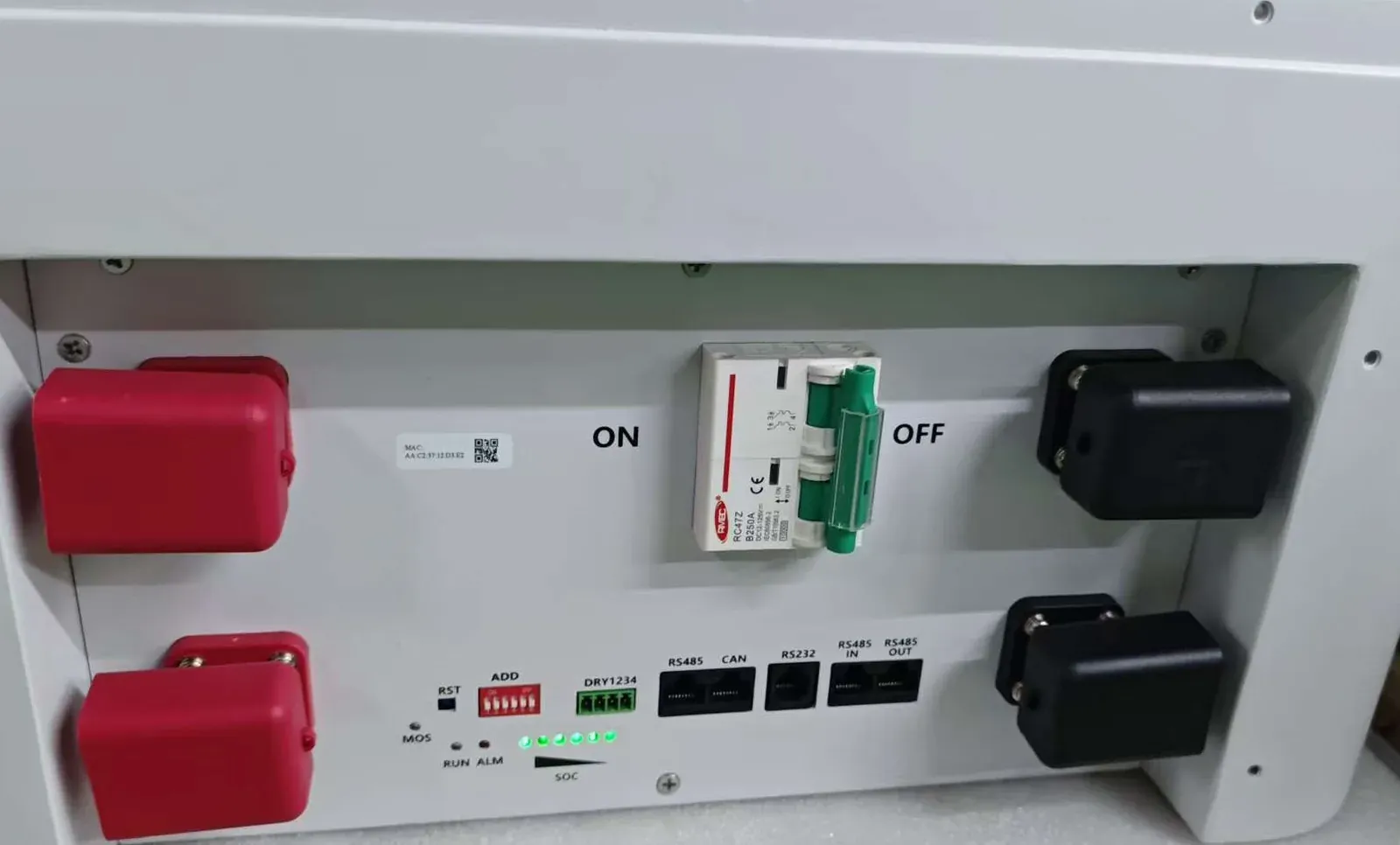
Output terminal and communication port interface on 48V/51.2V rack-mount ESS battery systems.
1. Start from the inverter / UPS window
Read the host absolute maximum and recommended battery voltage range first. A “48V class” label on marketing pages is not proof that a 51.2V nominal string will fit.
-
Absolute max battery voltage
-
Recommended operating window
-
Charge voltage and float behavior if applicable
-
Whether the host lists 48V and 51.2V separately
2. What 48V and 51.2V usually mean in LiFePO4 ESS
Both are planning platforms built from LiFePO4 series strings. Exact empty-to-full voltages depend on series count, BMS cutoffs, and charge limits—confirm the datasheet window for the configuration under review.
-
Nominal vs full-charge voltage
-
BMS charge and discharge cutoffs
-
Usable energy at the duty depth of discharge
-
Do not equate Ah with runtime without average power
3. Rack vs wall-mounted is a second decision
After the voltage window is shortlisted, choose rack modules for cabinet / telecom / C&I-style installs, or wall-mounted modules when indoor residential mounting and stacking matter more.
-
Cabinet depth and rail standard
-
Wall load and indoor clearance
-
Cable entry and service access
-
Expansion by parallel modules vs larger single module
4. Multi-pack paralleling and protocol commissioning
Parallel capacity expansion requires dynamic current sharing and master-slave BMS protocol orchestration. Each battery pack integrates multi-drop RS485/CAN interfaces and address dials, ensuring balanced SOC distribution and coordinated protection without external combiners for standard configurations.
-
BMS / inverter protocol ownership
-
Parallel count and cable plan
-
Destination-market document scope
-
Sample validation before fleet lock
5. RFQ fields that unlock a useful quote
Useful ESS RFQs name the host model, voltage window, energy or runtime target, mounting style, parallel intent, protocol, and shipment country.
-
Inverter or UPS model
-
48V vs 51.2V preference with reason
-
kWh or runtime target
-
Rack vs wall constraint
-
Protocol and monitoring need
Engineering Baseline
48V vs 51.2V ESS planning checklist
Technical inputs recommended for engineering validation before final system architecture and quoting:
Host inverter/UPS model
Absolute voltage window
Preferred platform 48V or 51.2V
Usable energy or runtime target
Rack vs wall mounting
Parallel count assumption
BMS / inverter protocol
Cable and breaker plan
Destination market documents
Sample and annual quantity
Related products and applications
Continue to the relevant product and engineering pages.
Low-voltage pack vs high-voltage module
Comprehensive technical analysis comparing complete low-voltage rack batteries with high-voltage series ESS modules.
Open Low-voltage pack vs high-voltage module →Server rack LiFePO4 application
Integration scenarios for UPS, backup duration, and rack constraints.
Open Server rack LiFePO4 application →48V / 51.2V ESS product center
Open rack and wall-mounted routes after the voltage window is clear.
Open 48V / 51.2V ESS product center →Quality and validation
Evidence path before locking documentation and production assumptions.
Open Quality and validation →Custom battery pack RFQ checklist
Capture host, protocol, and market fields when catalog fit is unclear.
Open Custom battery pack RFQ checklist →FAQ
48V vs 51.2V ESS Battery Platform Choice | Staricell
Is 51.2V always better than 48V because it is higher?
No. Higher nominal voltage only helps when the host accepts that window and the usable-energy / parallel plan still fits. Outside the inverter limits it is a mismatch, not an upgrade.
When should buyers leave this page for product SKUs?
After the voltage window, mounting style, and runtime target are clear enough for catalog review. Use the rack application page for integration scenarios, then ESS product routes for SKU shortlist.
How does Staricell confirm inverter communication compatibility?
Our smart BMS hardware integrates standard CAN and RS485 physical communication interfaces supporting standard telemetry register architectures. During project consultation, our engineering team reviews your inverter single-line diagram, communication protocol documentation, baud rate, and heartbeat timeout settings to confirm register mapping and joint commissioning requirements.