

How to Choose a Battery for a Robot
Choose a robot battery by duty cycle, runtime, continuous and peak current, charging strategy, mechanical envelope, BMS communication, and validation requirements.
Robot battery selection should begin with the platform duty cycle rather than voltage and capacity alone. A service robot, AMR, robot dog, and industrial mobile platform can use similar nominal voltages while requiring very different current, charging, vibration, communication, and service behavior.
Start from the platform duty cycle, not voltage and Ah alone. Define runtime, continuous vs peak current, charging window, envelope, vibration, and BMS communication before shortlisting packs. Then open application scenarios or product routes when the voltage platform and smart-module need are clear.
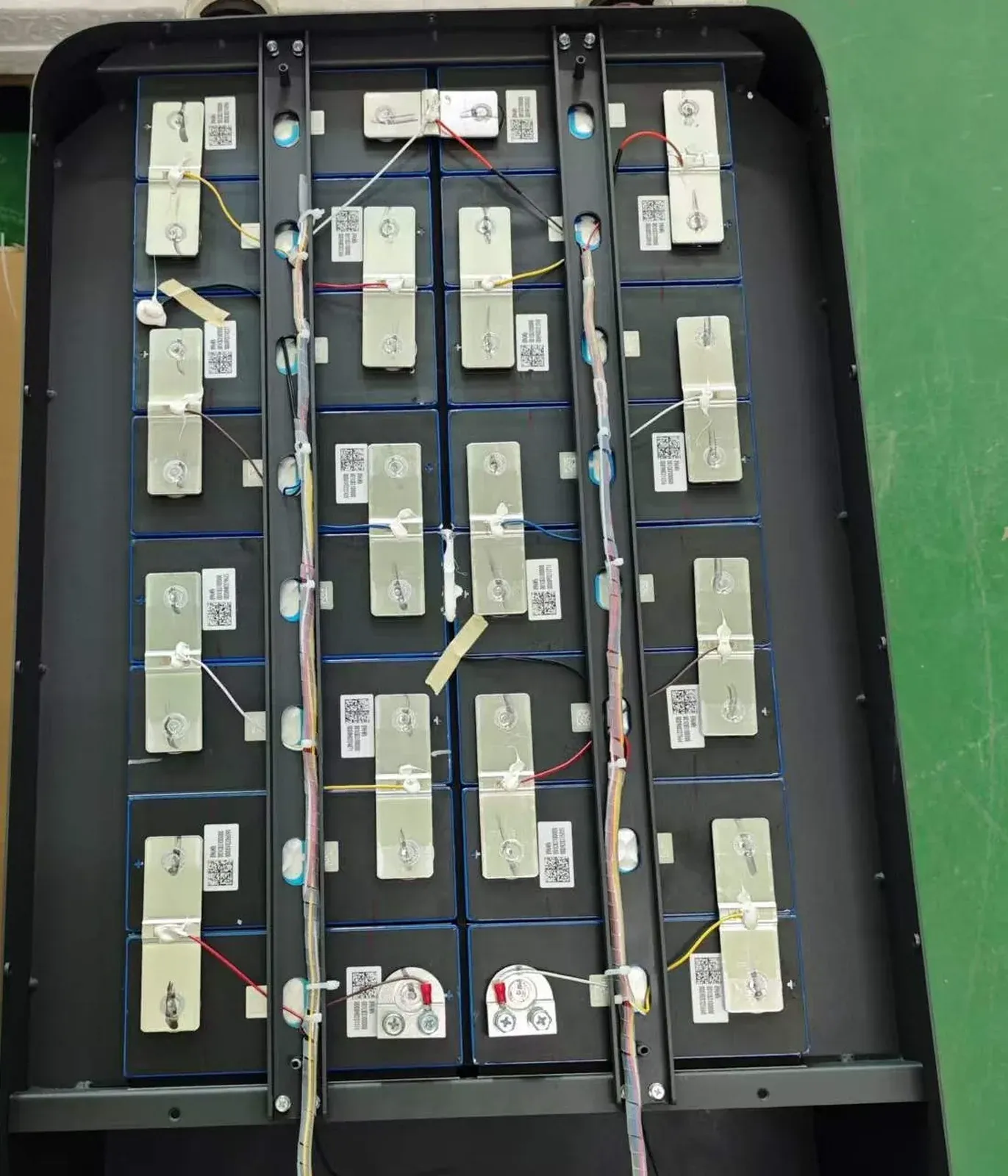
Laser-welded busbar layout and individual cell QR codes on a smart robot battery system, built for high mechanical shock resistance.
1. Define the robot duty cycle
Record how the robot moves, works, idles, charges, and returns to service during one shift. Runtime cannot be estimated reliably from capacity without the average-power profile and reserve requirement.
-
Operating hours per shift
-
Average and peak load events
-
Idle and standby consumption
-
Reserve energy and end-of-shift SOC
2. Separate continuous and peak current
Continuous current drives thermal behavior and cable sizing, while peak current influences voltage sag, connector selection, fuse or protection architecture, and whether the robot can complete acceleration or actuator events without a fault.
-
Continuous current and duration
-
Peak current and pulse duration
-
Regeneration or reverse-current behavior
-
Acceptable voltage sag
3. Match charging to operations
Overnight charging, opportunity charging, automated docking, and quick-swap batteries create different cell, charger, connector, thermal, and lifecycle requirements. The approved charge rate must be confirmed from the selected cells and duty cycle.
-
Charging window
-
Docking or manual connection
-
Charger communication
-
Battery swap and service access
4. Confirm mechanical and BMS integration
The battery must fit the robot envelope, center-of-gravity target, vibration environment, connector path, and controller interface. CAN or RS485 message maps, SOC behavior, faults, charger handshake, and protection thresholds should be reviewed before prototyping.
-
Envelope and weight limit
-
Mounting and vibration
-
CAN / RS485 / SOC requirements
-
Connector pinout and harness route
5. Common selection mistakes and handoffs
Do not shortlist a robot pack from voltage and Ah alone, reuse a forklift / AGV logistics brief as a robot platform brief, or treat CAN / RS485 as interchangeable ports. Use this page for selection method; open the robotics application page for platform and duty-cycle scenarios; open robot product routes when the voltage platform and smart-module need are clear; open Custom OEM when architecture is still undefined.
-
Method here → application scenarios → product routes
-
Logistics forklift briefs stay on industrial logistics
-
Protocol details continue on the CAN vs RS485 guide
-
Undefined cell / PACK / BMS → Custom OEM
Engineering Baseline
Robot battery RFQ checklist
Technical inputs recommended for engineering validation before final system architecture and quoting:
Robot type and duty cycle
Voltage window
Runtime target
Continuous and peak current
Charging strategy
Battery envelope and weight
Connector and harness
BMS communication
Operating environment
Sample and annual quantity
Related products and applications
Continue to the relevant product and engineering pages.
Robot battery applications
Platform and duty-cycle selection for AMR, service, warehouse, industrial, and legged robots.
Open Robot battery applications →Custom battery packs for robotics
Product routes after selection—robot dog, 72V AMR, and smart module.
Open Custom battery packs for robotics →Custom battery design
Start a project when the cell, PACK, BMS, or enclosure is not yet defined.
Open Custom battery design →Quality and validation
Evidence for testing, traceability, and project validation before locking a robot pack route.
Open Quality and validation →FAQ
How to Choose a Battery for a Robot | Staricell
Is voltage and capacity enough to choose a robot battery?
No. Duty cycle, continuous and peak current, charging, envelope, weight, vibration, communication, environment, and validation requirements are also needed.
When should buyers leave this guide for the application or product page?
Stay here for selection method and RFQ inputs. Open the robotics application page for platform scenario mapping. Open robot product routes when the platform voltage and smart-module need are clear enough to review SKUs.
Should AMR batteries support opportunity charging?
It depends on fleet operations. Opportunity charging can reduce battery size or downtime, but the cell, thermal, charger, connector, BMS, and lifecycle implications must be reviewed together.