

How to Choose 18650 vs 21700 vs 32700 Cylindrical Cells
A comprehensive engineering guide to selecting between 18650, 21700, and 32700 cylindrical cells based on mechanical envelope, chemistry (NMC vs LiFePO4), continuous vs pulse discharge currents, and thermal dissipation constraints.
18650, 21700, and 32700 cells represent distinct structural and electrochemical building blocks tailored for different power and energy profiles. Selecting the right format requires evaluating diameter constraints, active chemistry, continuous discharge requirements, and assembly topology early in system design.
Select 18650 for space-constrained, highly mature Li-ion configurations; choose 21700 to maximize energy density while reducing parallel cell count and interconnects; deploy 32700 LiFePO4 for 12.8V / 25.6V modules prioritizing long cycle life and thermal stability. Always evaluate continuous thermal dissipation and charging windows alongside nominal capacity.
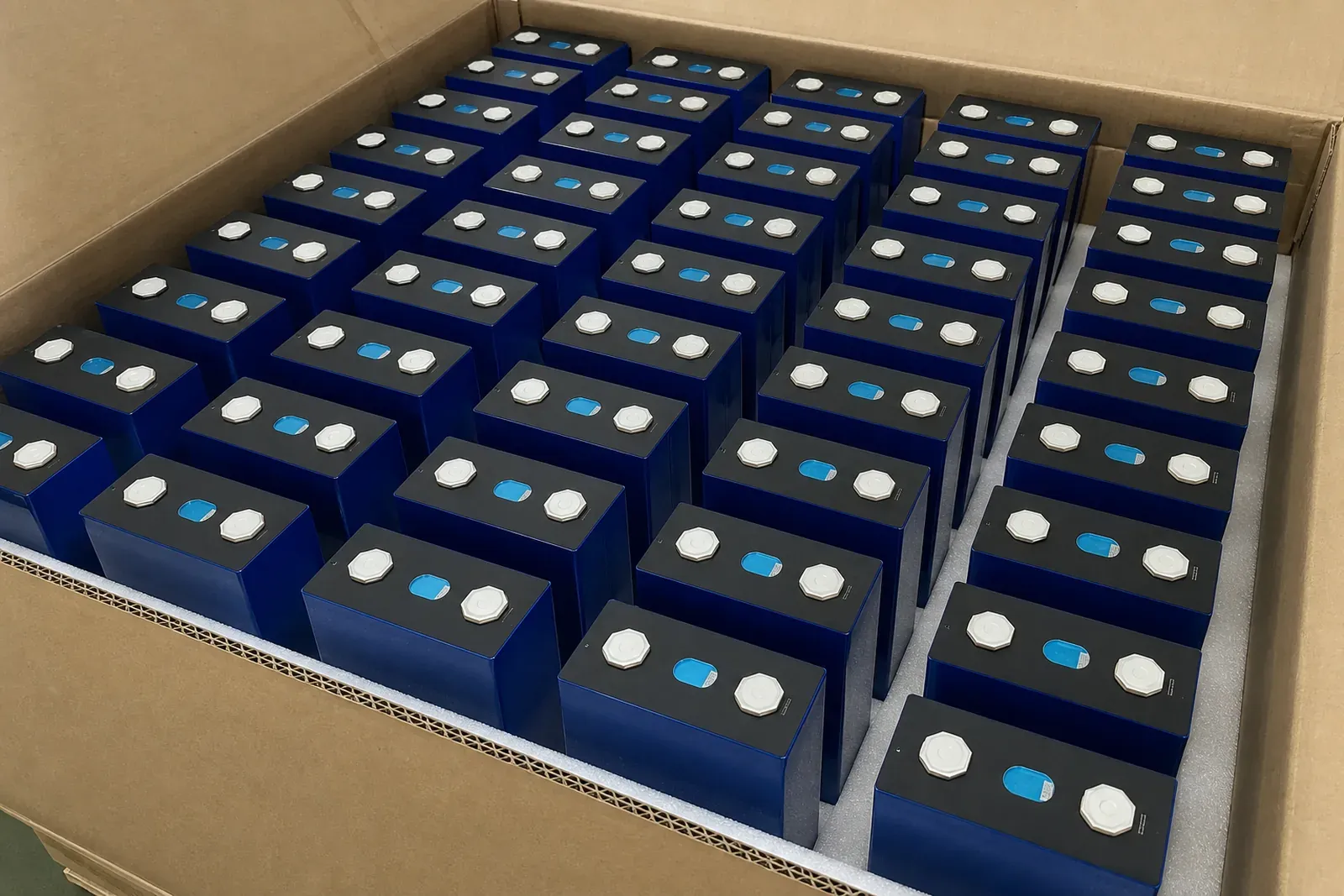
Cell-level incoming inspection comes before format shortlisting. Diameter, chemistry, and current class are confirmed against the project envelope—not a brand catalog.
1. Compare the three formats before any grade
Treat 18650 and 21700 as Li-ion cylindrical routes and 32700 as a LiFePO4 cylindrical route. Typical bands below are for shortlisting only. Higher capacity or current classes exist, but they are project-confirmed—not the default.
-
18650: Φ18×65mm class; typical about 2.0–3.5Ah; energy 5–10A, power 15–25A, high-rate 30–40A typical
-
21700: Φ21×70mm class; typical about 3.0–5.5Ah; energy 10–15A, power 25–35A, high-rate 35–50A typical
-
32700 LiFePO4: Φ32×70mm class; about 5.5–6.5Ah / 3.2V; continuous often 1C–3C; 4S ≈ 12.8V, 8S ≈ 25.6V
-
Do not copy cell amps onto a finished PACK—harness, connector, and BMS usually limit first
2. When to choose 18650, 21700, or 32700
Start from the bay, holder, and chemistry target. Current class is the second filter, not the first. If the holder is already 18650, do not force 21700 without a mechanical redesign.
-
Choose 18650 when diameter is tight, existing holders exist, sampling cost must stay controlled, or the supply chain already centers on compact Li-ion cells
-
Choose 21700 when the project needs higher cell capacity, fewer parallels, or more current margin in the same pack space
-
Choose 32700 LiFePO4 when safety, thermal stability, cycle life, and 12V / 24V module math matter more than maximum Li-ion energy density
-
Two-wheel and light ESS energy-class 21700 cells are a common fit; high-rate 18650 / 21700 cells fit tools and pulse hosts
3. Energy, power, and high-rate are not the same as Ah
A 3.5Ah 18650 energy cell and a 2.5Ah high-rate 18650 serve different hosts. Shortlist the class from continuous current, pulse duration, and charge window, then open the matching cell detail page.
-
Energy class: runtime-first, charge about 0.2C–0.5C; do not treat it as a tool cell
-
Power class: balances capacity with continuous current for vacuums, mid-load tools, and compact mobility
-
High-rate class: pulse or tool current dominates; confirm continuous vs pulse and 80°C cutoff before sampling
-
4.0Ah 18650, 6.5Ah 21700, and 60A+ currents stay project-confirmed—not default catalog bands
4. How to read a cylindrical cell datasheet
Datasheet maxima are often conditional. Read temperature cutoff, pulse width, and charge limit before copying a current into the RFQ. 1 kHz ACIR is for incoming matching; pack heating follows DCIR.
-
Maximum discharge often assumes an 80°C cutoff or a short pulse—not unlimited continuous current in a sealed pack
-
Compact packs without active cooling may need about 25%–40% derating on long continuous duty
-
Energy-class cells usually stay near 0.2C–0.5C charge; forcing tool-cell charge rates can plate lithium
-
Cycle-life figures depend on DOD, charge voltage, and temperature—do not treat “500 cycles ≥80%” as a Staricell pack promise
5. Buy cells only when pack engineering is already owned
Cell pages assume the buyer already controls series-parallel layout, welding or holders, BMS, enclosure, connector, and validation. If those boundaries are still open, start with Custom OEM or the matching custom cylindrical PACK page.
-
Cell RFQ: format, capacity class, continuous vs peak current, charge window, ACIR window, sample quantity, UN38.3 / MSDS scope
-
Pack RFQ: add envelope, connector, BMS map, charger, environment, and annual quantity
-
Do not mix 32700 LiFePO4 planning bands with 21700 Li-ion high-rate currents
-
Cell sourcing is confirmed alongside original manufacturer datasheets, batch OCV/ACIR matching, and UN38.3 test records
Engineering Baseline
Cylindrical cell RFQ checklist
Technical inputs recommended for engineering validation before final system architecture and quoting:
Bay / holder diameter (18650, 21700, or 32700)
Chemistry target (Li-ion vs LiFePO4)
Energy, power, or high-rate class
Capacity target and parallel count assumption
Continuous current and duration
Peak current and pulse width
Charge current and 4.15V vs 4.20V limit
Active cooling or 80°C cutoff acceptable
Capacity and 1 kHz ACIR matching window
Sample quantity, annual forecast, UN38.3 / MSDS
Related products and applications
Continue to the relevant product and engineering pages.
Cylindrical lithium cells
Format overview, matching, and cell-level quality after the shortlist is clear.
Open Cylindrical lithium cells →18650 cylindrical lithium cell
Compact Li-ion class bands, matching checkpoints, and cell-only RFQ fields.
Open 18650 cylindrical lithium cell →21700 cylindrical lithium cell
Higher-capacity Li-ion bands and continuous-vs-pulse / thermal-cutoff notes.
Open 21700 cylindrical lithium cell →32700 LiFePO4 cylindrical cell
3.2V building blocks for 12.8V / 25.6V long-life modules—not a Li-ion high-rate route.
Open 32700 LiFePO4 cylindrical cell →Lithium battery specification comparison
Cross-catalog voltage and capacity planning table—not the cylindrical format decision.
Open Lithium battery specification comparison →Custom OEM battery packs
Start pack design when series-parallel, BMS, enclosure, or connector are still open.
Open Custom OEM battery packs →FAQ
How to Choose 18650 vs 21700 vs 32700 Cells | Staricell
Is a higher Ah cylindrical cell always the better choice?
No. Higher Ah often means lower continuous current and a slower charge window. Match energy, power, or high-rate class to the host before comparing capacity.
Can Staricell build packs using specific Tier-1 cylindrical cells (e.g., Samsung, Molicel, LG, Panasonic, or EVE)?
Yes. For custom OEM/ODM pack projects, we source and match specific Tier-1 cell models according to your target performance and brand requirements, providing factory lot inspection, OCV/ACIR sorting data, and original manufacturer datasheets during technical kickoff. Standard engineering guidelines highlight general electrical design envelopes to ensure pack-level thermal and current safety across suppliers.
Can this page replace the 18650 / 21700 / 32700 product pages?
No. This guide decides the format. Each cell page owns class bands and matching for that diameter. Finished packs belong on the custom 18650, 21700, or 32700 PACK pages.
When should buyers open the specification comparison page instead?
Use the specification comparison page for cross-catalog voltage, capacity, and chemistry tables. Stay here when the question is specifically 18650 vs 21700 vs 32700 cylindrical format.