

How We Pack Lithium Batteries for International Shipping
Review UN-certified export packaging, Class 9 hazard labeling, 4D crate specifications, UN38.3 test summaries, and customs declaration requirements for industrial lithium packs.
Transporting industrial lithium battery packs across international borders requires stringent adherence to dangerous goods regulations. Beyond cell chemistry and nominal capacity, export success hinges on certified packaging design, durable cushioning, verified UN stamps, and complete regulatory paperwork. Here is how our factory prepares batteries for air and sea export.
Industrial lithium batteries are classified as Class 9 dangerous goods (UN3480 or UN3481) and must ship in UN-certified packaging (such as 4D plywood boxes or 4GV combination packs) carrying valid packaging test stamps. Compliant export requires a valid UN38.3 test summary, SDS, transport appraisal certificate, strict gross mass control, and drop-tested internal insulation.
External Standards & References
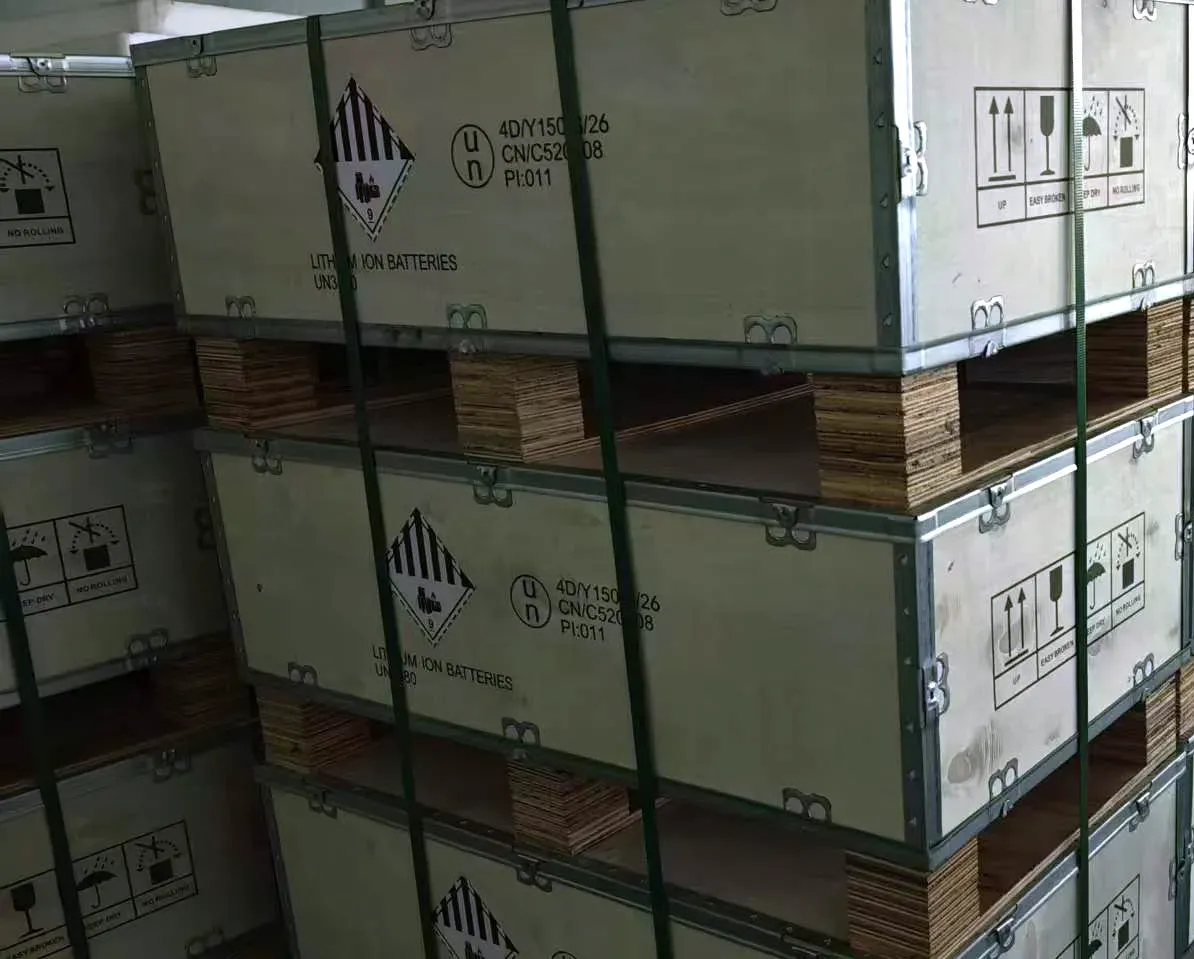
UN3480 Class 9 hazard label and official crate stamp (4D/Y150/S/26) photographed in our export staging area (September 2026).
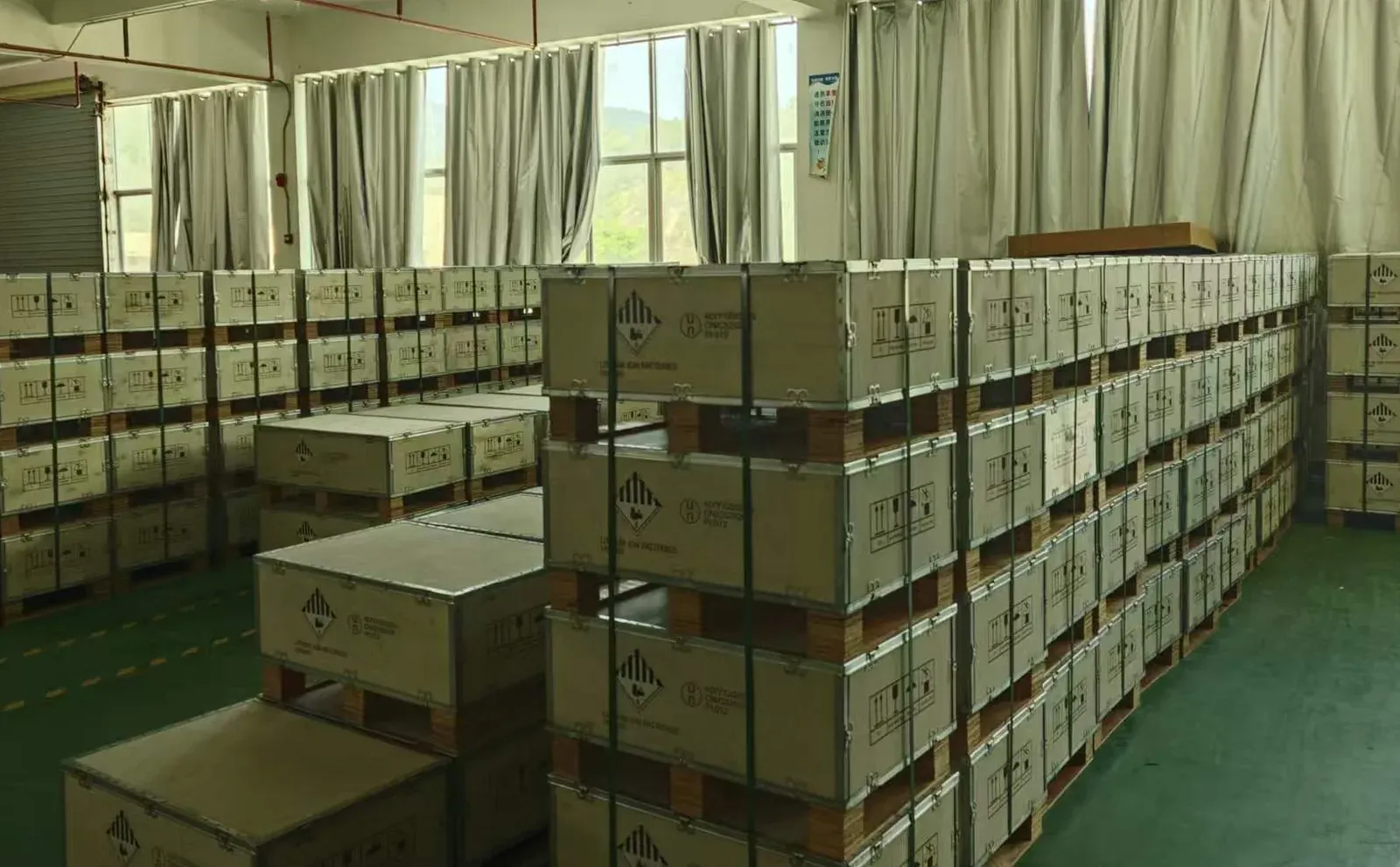
Finished battery packs staged next to matching UN crates before final pallet strapping and film wrapping.
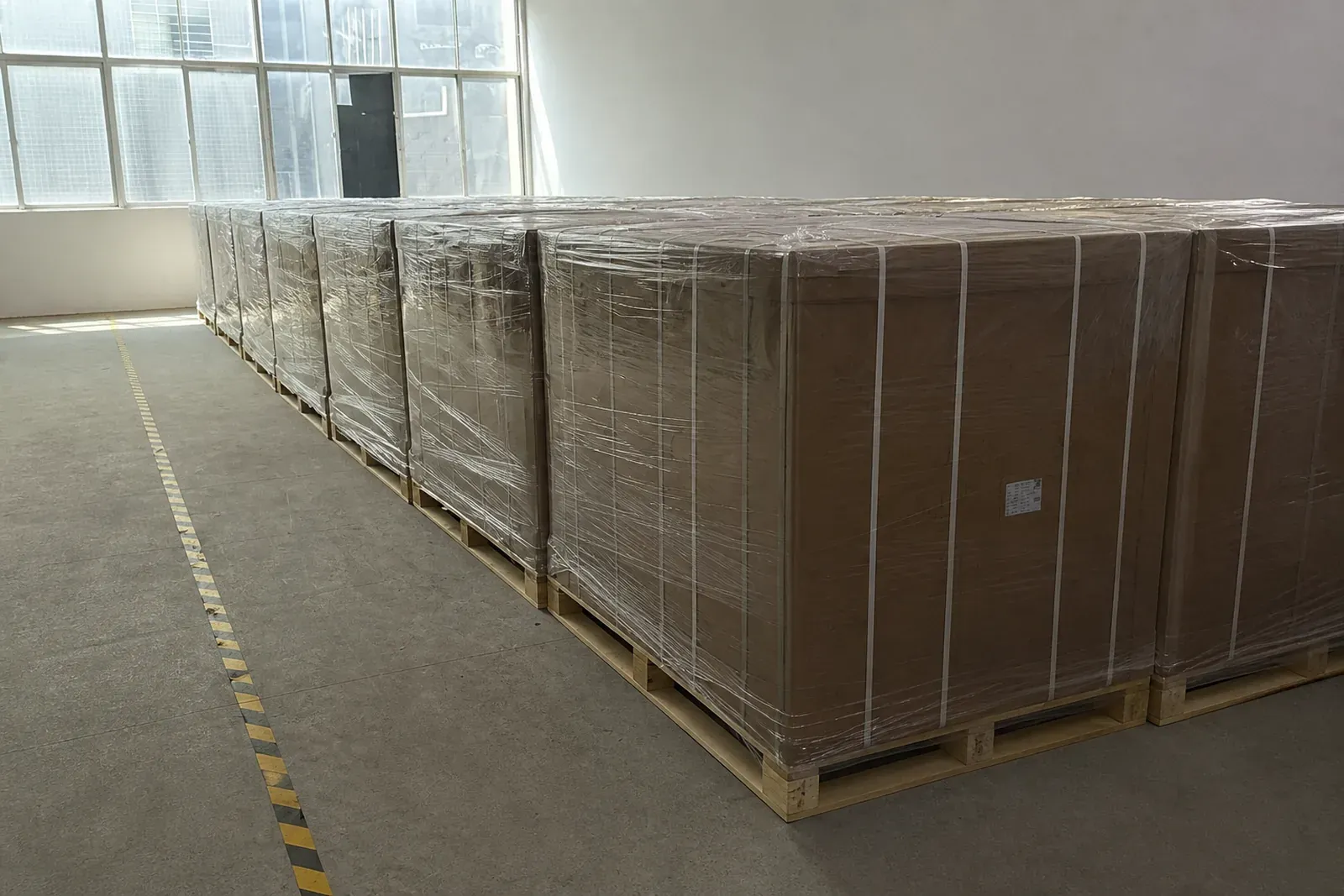
Stretch-film wrapping and palletized consolidation for secure long-distance sea freight transit.
1. Why Class 9 Lithium Batteries Demand UN-Certified Packaging
Lithium ion batteries (UN3480) carry inherent electrochemical energy and are regulated under dangerous goods transport codes worldwide (IMDG for ocean freight, ICAO/IATA for air freight). Standard commercial corrugated boxes cannot withstand stack pressures, drop shocks, or internal puncture risks during intermodal handling. UN-certified packaging guarantees that the complete package assembly has passed strict drop, stack, and pressure differential testing.
-
UN3480: Lithium ion cells or packs shipped without equipment
-
UN3481: Lithium ion batteries packed with or contained in equipment
-
Mandatory Class 9 hazard diamond label with distinct battery icon
-
Drop tested from up to 1.8 meters depending on packing group
2. Decoding the UN Crate Stamp: What 4D/Y150/S Means
Every certified export container bears a permanent stamped code approved by competent national packaging inspection bodies. On our crates, you can see the clear marking: 4D / Y150 / S / 26. Each character conveys critical engineering boundaries that customs officials and shipping lines verify before loading.
-
4D: Plywood box construction offering high shear rigidity without heavy lumber tare weight
-
Y: Packing Group II certification (satisfies requirements for Groups II and III goods)
-
150: Maximum certified gross mass in kilograms (box plus battery contents)
-
S: Designed and approved specifically for solids or sealed inner articles
-
26: Year of manufacture (2026), ensuring packaging freshness within the allowed validity period
3. Internal Cushioning, Cell Insulation, and Short-Circuit Protection
The wooden outer shell is only the first layer of defense. Inside the crate, our assembly team uses precision-cut flame-retardant EVA and closed-cell EPE foam trays. Terminal connectors (such as Amphenol, Anderson, or high-current screw studs) are insulated with custom plastic caps. Packs cannot move relative to one another even if the box undergoes tilt or severe vibration.
-
Custom-molded foam pockets matching the exact chassis outline of the battery
-
Non-conductive barriers isolating high-voltage connectors and communication pins
-
Silica gel desiccant packs enclosed within heavy-gauge vapor-barrier bags
-
Corner reinforced plywood cleats designed to resist multi-tier vertical forklift stacking
4. Required Documentation: UN38.3, MSDS, and Air/Sea Transport Certificates
Packaging alone will not pass freight terminals without complete regulatory paperwork. Every export shipment is paired with a technical dossier verifying thermal, electrical, and mechanical integrity.
-
UN38.3 Test Summary (T1 Altitude, T2 Thermal, T3 Vibration, T4 Shock, T5 External Short, T6 Impact/Crush, T7 Overcharge, T8 Forced Discharge)
-
Safety Data Sheet (SDS / MSDS) compliant with GHS Revision 9 and OSHA standards
-
Dangerous Goods Package Performance Inspection Certificate (出境危险货物运输包装性能检验结果单)
-
Safe Transport of Chemical Goods Appraisal Certificate (海运/空运货物运输条件鉴定书)
5. Planning Packaging Inputs in Your Custom Battery RFQ
When submitting an RFQ for custom battery packs, transport planning should begin at the mechanical design phase. The target destination country, air freight vs ocean freight preferences, maximum pallet footprint, and recipient warehouse receiving capabilities all dictate crate dimensions and pallet configuration.
-
Specify target destination country and preferred seaport or airport
-
State whether single-pack delivery or multi-pack palletized shipment is required
-
Confirm recipient forklift and pallet jack clearance constraints
-
Clarify if local certification files (e.g. CE, UL, IEC) must be bundled with crate manifests
Engineering Baseline
Export packaging & shipping checklist
Technical inputs recommended for engineering validation before final system architecture and quoting:
Select UN-rated crate (e.g., 4D plywood or heavy fiberboard)
Confirm packing group rating (Group II / Y stamp)
Verify UN38.3 test summary covers the exact cell & pack SKU
Inspect flame-retardant EVA foam lining fitment
Verify Class 9 dangerous goods label & UN3480 marking
Record gross weight to stay strictly under certified rating
Confirm battery SOC is ≤ 30% for dedicated air cargo
Attach waterproof packing slip & dangerous goods declaration
Related products and applications
Continue to the relevant product and engineering pages.
UN38.3 vs MSDS Guide
Learn the crucial differences between laboratory UN38.3 test summaries and GHS-compliant material safety data sheets.
Open UN38.3 vs MSDS Guide →Quality Evidence Hub
Inspect our six quality gates, incoming cell checks, laser welding, and battery cycling verification.
Open Quality Evidence Hub →Custom PACK Process
Review the full custom assembly lifecycle from cell sorting and busbar welding to final boxing.
Open Custom PACK Process →FAQ
How We Pack Lithium Batteries for International Shipping | Staricell
Can lithium batteries be shipped internationally in standard commercial boxes?
No. Industrial lithium batteries with capacities exceeding 100Wh are strictly classified as Class 9 dangerous goods. International transport regulations (IMDG/IATA) mandate UN-tested and certified packaging with authorized performance marks. Standard cardboard boxes fail drop and compression tests, leading to terminal rejection or seizure by maritime authorities.
What is the difference between UN3480 and UN3481?
UN3480 applies to standalone lithium ion batteries shipped on their own (cells or finished packs in cartons). UN3481 applies to lithium batteries packed alongside or installed directly inside the equipment they power (such as a robot or energy storage cabinet). Packaging and labeling rules differ slightly between the two codes.
How long is a UN packaging certification stamp valid?
Packaging manufacturing standards usually permit a maximum shelf and transit life of two to five years depending on local authority rules and box material. In China, Dangerous Goods Package Use Certificates are typically issued per batch with a 6-month validity for the specific voyage.
Does shipment form decide where series connection happens?
Yes. Loose modules are series-connected at the buyer site. A pre-assembled cabinet is series-connected before it leaves the factory. The two forms are different UN38.3 test objects. See the UN38.3 and SDS guide before locking the file scope.
Why is air cargo restricted to 30% state of charge (SOC)?
ICAO regulations mandate that standalone lithium ion batteries (UN3480) shipped by dedicated cargo aircraft must not exceed 30% SOC. Lower energy states drastically reduce the severity of thermal runaway propagation in the event of an external fire, ensuring aircraft cargo hold safety.