

Inside Our QC: 100% Charge-Discharge Cycling Before Shipment
Explore our 100% full-pack charge-discharge cycling protocol: automated aging cabinets, CC-CV profiles, cell voltage-delta screening, and BMS telemetry logging before shipment.
In industrial battery manufacturing, open-circuit voltage tests at static idle reveal almost nothing about how a pack behaves under thermal and electrical load. A pack can show nominal voltage while harboring a high-resistance weld, an unbalanced series cell, or a faulty BMS temperature sensor. To ensure zero-defect delivery, our factory subjects every finished battery pack to full charge-discharge cycling in automated testing cabinets before sign-off.
Before shipment, 100% of finished battery packs are connected to multi-channel computerized test cabinets to undergo a full charge-discharge-charge aging cycle. We record exact ampere-hour capacity, verify CC-CV cutoff thresholds, monitor cell voltage balance (rejecting packs with cell delta > 15mV under load), and stress-test BMS protection functions.
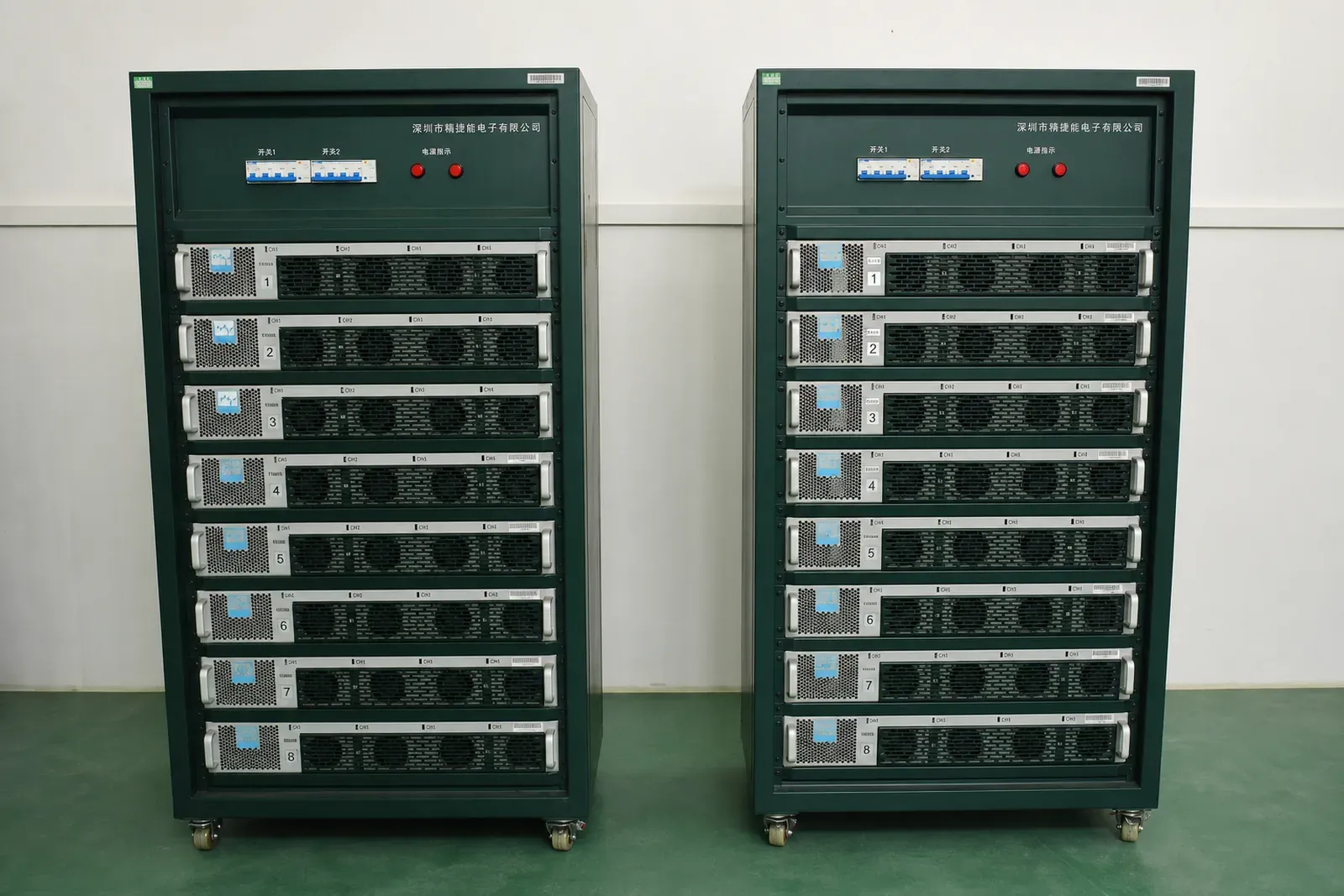
Multi-channel automated cycling cabinets used for 100% finished battery pack burn-in and capacity verification.
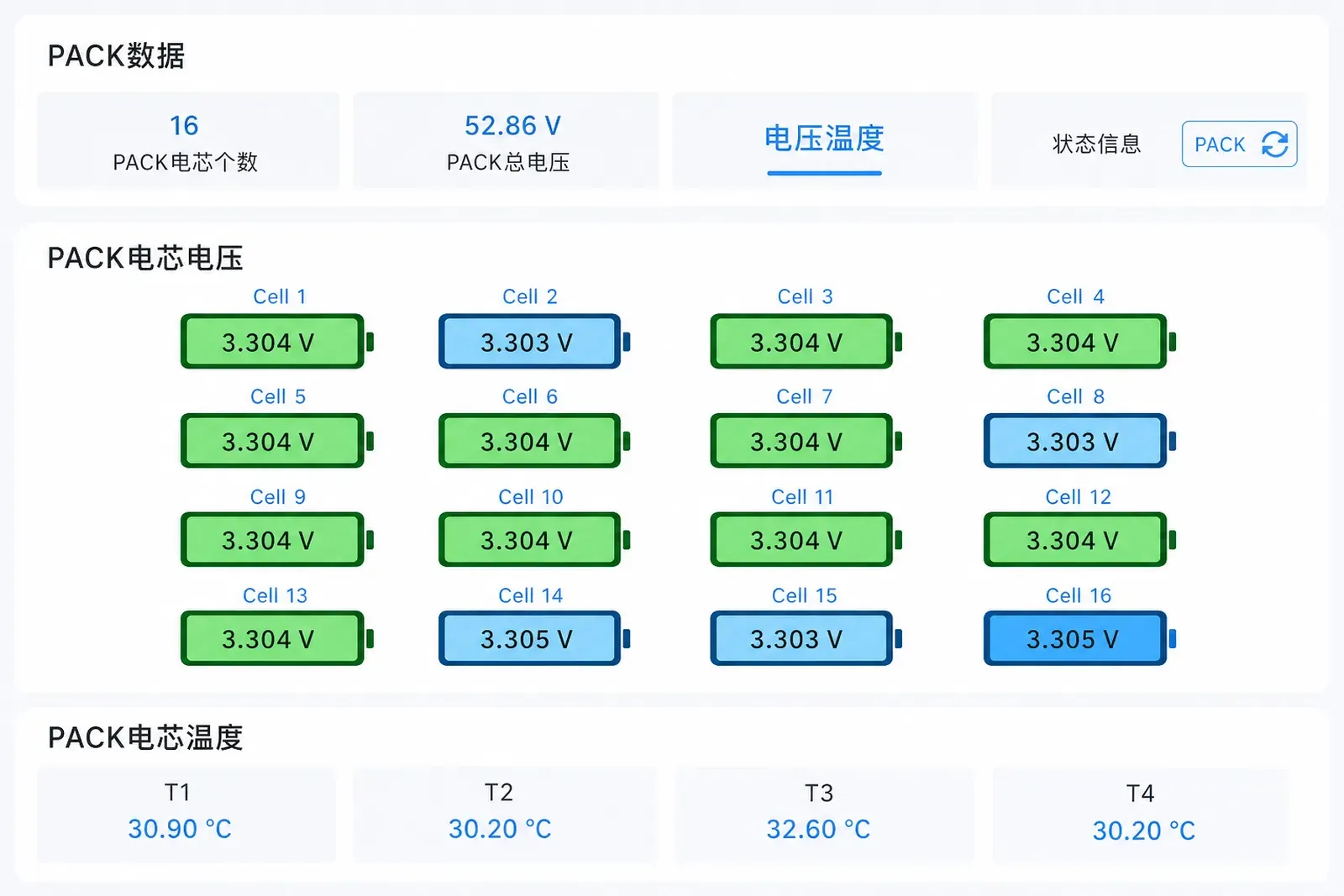
Real-time BMS cell voltage monitoring during cycling: 16S LiFePO4 cells balanced between 3.303V and 3.305V.
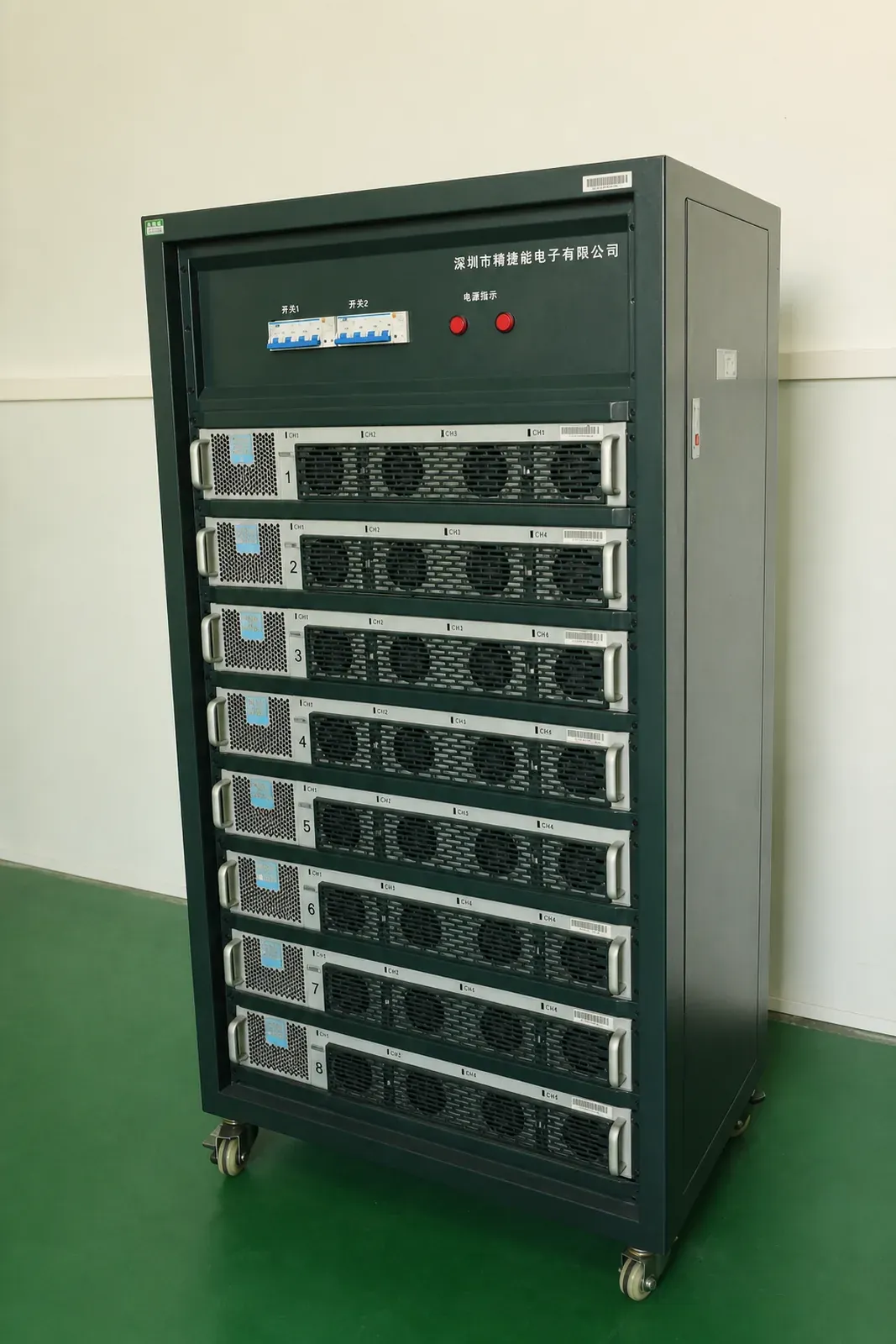
Independent channel control allows precise CC-CV profiling, temperature monitoring, and ampere-hour recording per pack.
1. Why Pack-Level 100% Cycling Beats Spot-Checking
Spot-checking works well for passive components, but a lithium battery is an active chemical reactor coupled with complex power electronics. A minor welding contact imperfection or an outlier cell may not fail under initial visual inspection. Only when the pack experiences real electrical current flow and thermal expansion will latent defects reveal themselves.
-
Exposes high-resistance micro-welds under thermal expansion
-
Validates real usable capacity (Ah/Wh) against nameplate rating
-
Eliminates infant mortality failures before shipment leaves the dock
-
Establishes a baseline electrical fingerprint for every serial number
2. The 3-Step Aging Cycle: Charge, Rest, and Discharge
Each battery pack follows an automated three-phase recipe pre-programmed into the test cabinet master controller. The process verifies the entire operational envelope defined by the cell manufacturer and custom BMS specification.
-
Phase 1 - CC/CV Full Charge: Constant current charging up to maximum nominal cutoff voltage, followed by constant voltage saturation until taper current threshold is reached
-
Phase 2 - Controlled Rest (1 to 2 Hours): Open-circuit relaxation to monitor internal chemical stabilization and self-discharge voltage sag
-
Phase 3 - Rated Discharge: Constant current discharge to cutoff voltage, integrating exact Ah delivered and recording thermal rise
-
Phase 4 - Storage SOC Re-charge: Bringing the pack to ~30% (for air freight) or ~50% (for sea transit) storage charge
3. Cell Voltage Delta Screening: Catching Outliers Under Load
Static cell matching before assembly is mandatory, but true consistency can only be confirmed under dynamic current. During the discharge phase, the BMS telemetry interface reads individual cell voltages continuously. If any single cell sags prematurely or shows a voltage delta exceeding 15mV relative to the pack median, the unit is flagged for root-cause engineering review.
-
16S / 24S individual cell voltage telemetry streamed at 1-second intervals
-
Rejection criteria: cell voltage delta > 15mV during plateau discharge
-
Ensures equal aging rate across all series strings over multi-year service
-
Prevents early BMS low-voltage cutoffs caused by a single weak cell
4. BMS Protection and Communication Handshake Verification
Testing the chemistry is half the battle; testing the protection brain is equally vital. During the cabinet run, the test script simulates over-voltage and under-voltage events to verify that the solid-state MOS or contactors trigger within milliseconds. Simultaneously, CAN / RS485 communication packets are polled to verify that telemetry reporting matches actual cabinet meters.
-
Verification of charge and discharge MOS gate enable/disable response
-
Calibration check of NTC temperature sensor readings against ambient sensors
-
CANbus / RS485 packet integrity test (SOC, SOH, cell max/min, alarm flags)
-
Manual short-circuit and emergency shutdown hardware link verification
5. Converting Cycling Data into Batch Delivery Evidence
Data collected during cycling does not disappear into a local hard drive. Each pack's complete charge-discharge curve, temperature profile, and serial barcode are saved into our manufacturing execution system (MES). Buyers can request traceable cycling reports corresponding to their specific delivery batch.
-
Automated generation of PDF batch test certificates with serial-linked data
-
Archive retention for minimum 5 years to support warranty and field inquiries
-
Provides clear proof of compliance for OEM incoming inspection audits
-
Enables rapid root-cause analysis in case of customer installation anomalies
Engineering Baseline
100% cycling test parameter checklist
Technical inputs recommended for engineering validation before final system architecture and quoting:
Record pack barcode & channel assignment
Set CC charging rate & CV cutoff current threshold
Verify 1–2 hour open-circuit relaxation period
Record discharged Ah & Wh capacity to end voltage
Confirm cell voltage delta ≤ 15mV across all series strings
Check all NTC temperature sensors remain within thermal bounds
Validate CAN/RS485 baud rate and telemetry registers
Re-charge to compliant shipping SOC (~30% air, ~50% ocean)
Related products and applications
Continue to the relevant product and engineering pages.
Quality Gates & Testing
Review all six inspection gates including CCD inspection, X-ray scanning, and OCV matching.
Open Quality Gates & Testing →Cell vs Module vs Pack
Understand why pack-level testing involves far more mechanical and BMS variables than bare cells.
Open Cell vs Module vs Pack →Robot Battery Systems
Explore custom 48V/72V robot battery systems built with full BMS telemetry and cycle screening.
Open Robot Battery Systems →FAQ
Inside Our QC: 100% Charge-Discharge Cycling Before Shipment | Staricell
Why is 100% cycling necessary if cell suppliers already test cells?
Cell manufacturer testing only validates the chemical cell in isolation. Once cells are spot-welded or laser-welded with busbars, wired to a BMS harness, fitted with fuses, and compressed in an enclosure, dozens of electrical and thermal interfaces are created. Only full pack cycling tests the complete integrated system.
Can customers receive individual cycling reports for their orders?
Yes. Every serialized battery pack produces a digital log in our test system. We can export verified test summaries including capacity (Ah), energy (Wh), voltage curves, and maximum temperature rise upon project request.
What is the acceptable cell voltage delta during full discharge?
For matched LiFePO4 packs, we target cell voltage deltas under 10mV during steady plateau discharge and reject packs exceeding 15mV before end-of-discharge knee points. Tighter consistency prevents premature BMS cutoff and maximizes usable operational runtime.
How long does a standard cycling and aging test take?
A standard full cycle consisting of 0.5C charge, 1 to 2 hour rest, 0.5C discharge, and storage re-charge requires approximately 6 to 8 hours per batch. For critical mission profiles, extended multi-cycle burn-in can be programmed per customer specification.