

LiFePO4 vs NMC for Robot Batteries
A comprehensive engineering evaluation comparing LiFePO4 and NMC chemistries for robotics and AMR applications, analyzing operational duty cycles, thermal margins, opportunity charging behavior, and structural weight distribution.
LiFePO4 and NMC chemistries each offer distinct advantages across robotics and AMR architectures. Selecting the optimal chemistry requires balancing usable volumetric energy density, thermal safety margins, long-term cycle life, and charging duty cycles against chassis integration constraints.
Choose LiFePO4 when cycle life (2,000+ cycles), wide thermal margins, and frequent opportunity charging take precedence over minimal pack volume. Choose NMC when equipment bay envelope and weight limits strictly require maximum gravimetric energy density, provided the pack enclosure and thermal management adequately support cell cooling.
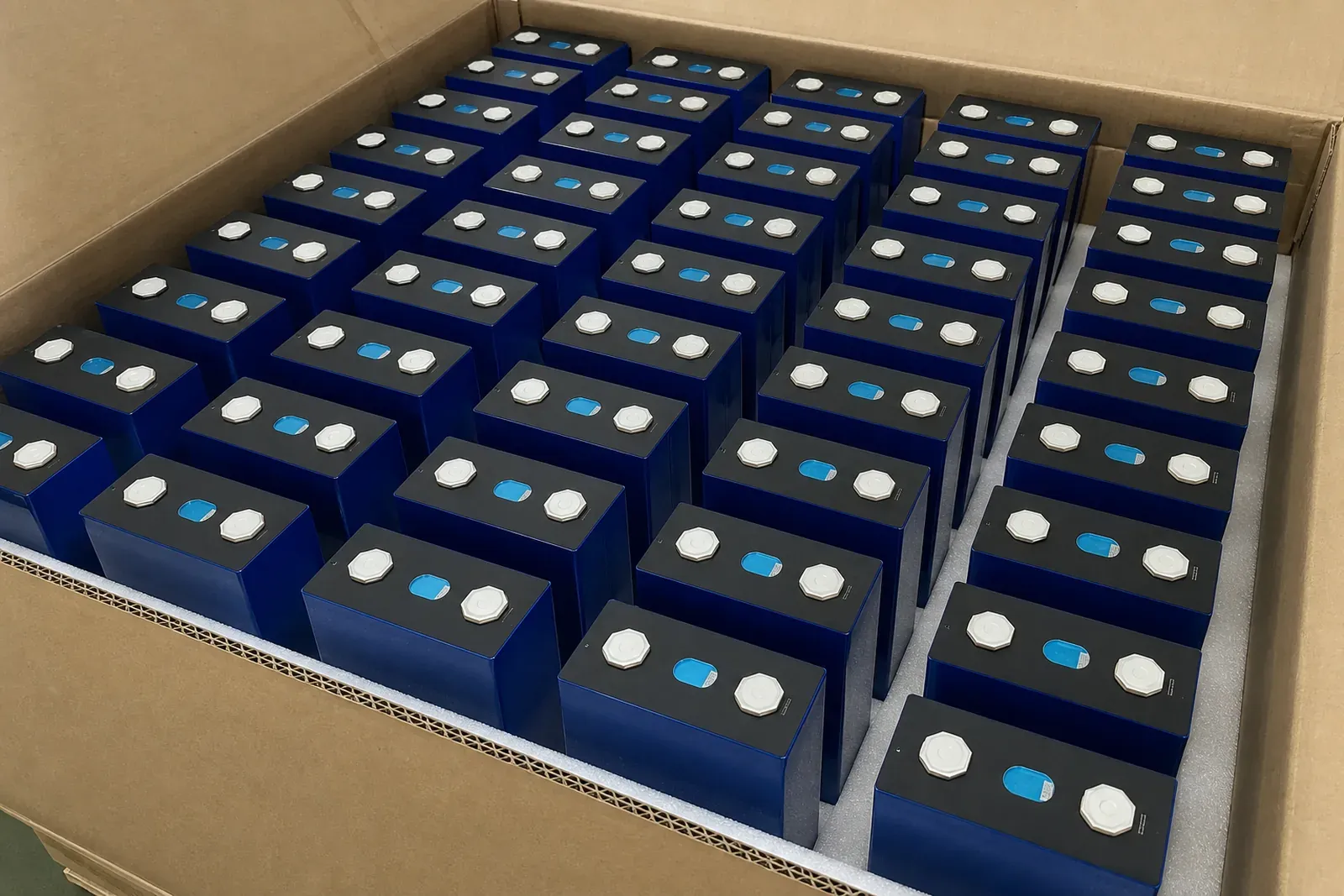
Factory incoming inspection of brand-name prismatic LiFePO4 cells for robot and AMR duty cycles.
1. Start from duty cycle, not chemistry keywords
Record shift runtime, average and peak load, idle draw, reserve SOC, charge window, ambient range, and vibration expectations. Chemistry shortlists only become useful after these constraints are written down.
-
Shift hours and reserve target
-
Continuous and peak current with duration
-
Opportunity charge vs overnight charge
-
Bay envelope and center-of-gravity limit
2. When LiFePO4 usually fits robot / AMR routes
LiFePO4 is often the planning first look for warehouse AMR and mobile platforms that prioritize cycle life, thermal headroom, and predictable charging over the smallest possible pack mass.
-
Long daily cycle count with defined charge windows
-
Indoor fleet thermal and service predictability
-
Voltage platforms that map cleanly to LiFePO4 series strings
-
Cycle-life and thermal margin over compact energy density
3. When NMC may fit—and what must be reviewed
NMC can be reviewed when envelope or weight limits leave insufficient usable energy under LiFePO4 for the same mission. The RFQ must then carry thermal path, charge limits, protection thresholds, and validation scope—not brochure energy-density language alone.
-
Tight bay or mass budget relative to runtime
-
Defined charge rate and thermal derating plan
-
Connector, harness, and BMS protection ownership
-
Sample validation for voltage sag and hot-spot behavior
4. Chemistry does not replace pack architecture
Series-parallel layout, BMS communication, connector pinout, enclosure, mounting, and charger handshake still decide whether a chemistry shortlist can become a robot pack.
-
CAN / RS485 or host reporting needs
-
Swap vs fixed-mount service model
-
Charger ownership and docking behavior
-
Undefined architecture → Custom OEM before SKU lock-in
5. What still needs RFQ before quotation
Do not treat chemistry preference as a complete brief. Missing current profiles, envelope drawings, protocol documents, or certification markets force planning assumptions that must be re-confirmed before prototype lock.
-
Voltage window and usable energy target
-
Continuous / peak / pulse table
-
Envelope, weight, and connector drawing
-
Validation and document scope for the target market
Engineering Baseline
LiFePO4 vs NMC planning checklist
Technical inputs recommended for engineering validation before final system architecture and quoting:
Robot / AMR duty cycle
Runtime and reserve SOC
Voltage window
Continuous and peak current
Charge window and method
Envelope and weight limit
Thermal path assumptions
BMS communication need
Chemistry preference with rationale
Sample and annual quantity
Related products and applications
Continue to the relevant product and engineering pages.
ESS battery system scope
This page compares robot chemistries. Storage scope and calendar-life reading sit on the ESS scope guide and the tech wiki.
Open ESS battery system scope →Robot battery applications
Platform and duty-cycle scenarios for AMR, warehouse, industrial, and legged robots.
Open Robot battery applications →Robot battery product routes
Open dog / 72V / smart-module routes after chemistry and platform needs are clear.
Open Robot battery product routes →How to choose a battery for a robot
Full selection method covering current, charge, envelope, and BMS before chemistry lock-in.
Open How to choose a battery for a robot →Quality and validation
Evidence path for testing, traceability, and project validation before production.
Open Quality and validation →FAQ
LiFePO4 vs NMC for Robot Batteries | Staricell
Is NMC always better for robots because of higher energy density?
No. Brochure energy density is not a pack selection decision. Runtime, thermal margin, cycle target, charge window, bay mass, and protection architecture must be reviewed together under Planning support assumptions.
When should buyers leave this page for product routes?
Stay here while chemistry trade-offs and RFQ inputs are still open. Open robotics applications for platform scenarios, then robot product routes when voltage platform and smart-module needs are clear enough for SKU review.
Can one robot platform mix LiFePO4 and NMC SKUs?
Only after voltage window, BMS thresholds, charger behavior, connector, and service labeling are confirmed for each chemistry. Mixed fleets without those controls create charging and protection risk.