

Robot Battery 48V vs 72V
Choose 48V or 72V for warehouse robots and AMR by current, cable heating, motor and controller ecosystem, and when to open a 72V product route versus a 48V smart-module path.
48V and 72V are platform decisions, not brochure labels. For the same mechanical power, a lower voltage usually means higher current, thicker conductors, and different motor-controller ecosystems. Select the voltage window with the drive system and fleet service model first, then open the matching product route.
Prefer 48V when the motor, controller, charger, and harness ecosystem already align to that window and cable heating stays acceptable for continuous duty. Open a 72V planning route when current at 48V forces oversized conductors, connectors, or thermal derating for the same power. Lock neither voltage from Ah alone—confirm current, pinout, and charge ownership in RFQ.
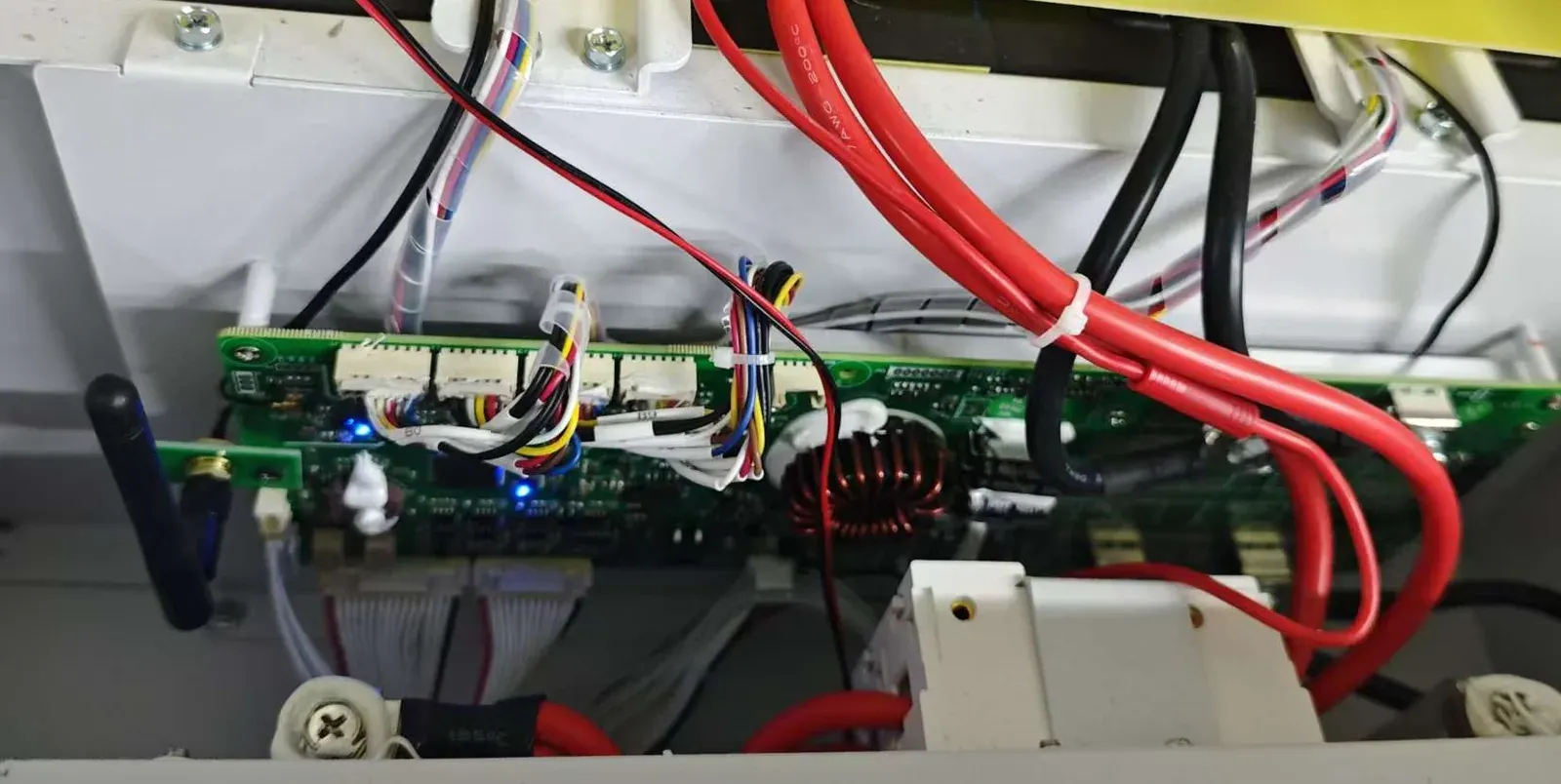
BMS circuit layout and wiring harness design balancing safety, isolation, and thermal margins across 48V/72V systems.
1. Voltage is a current and cable decision
For a given power demand, raising platform voltage reduces current for the same work. That can shrink wire gauge stress, connector heating, and voltage sag—if the motor, controller, and charger actually support the higher window.
-
Continuous current at target power
-
Peak current and pulse duration
-
Acceptable harness length and IR drop
-
Connector continuous and peak ratings
2. Match the motor and controller ecosystem
Do not select 72V because it sounds more industrial. Confirm the drive inverter, motor winding, regen behavior, and host controller voltage limits before changing platforms.
-
Controller absolute maximum voltage
-
Regen or reverse-current path
-
Charger output window and handshake
-
Existing spare-parts and service tooling voltage
3. When to stay on 48V / smart-module routes
Stay on 48V when current and thermal margins are acceptable, fleet chargers already exist, and the robot needs a repeatable smart module with SOC, fault, and CAN or RS485 reporting.
-
Existing 48V charger and dock fleet
-
Defined message map for smart-module review
-
Bay geometry suited to modular packs
-
Service preference for swap or modular replacement
4. When to open the 72V product route
Open the 72V industrial-robot route when platform power at 48V forces oversized conductors, persistent connector heating, or controller vendors already standardize on a higher window.
-
48V current exceeds practical cable or connector plan
-
Controller OEM documents a 72V-class window
-
Industrial robot bay designed for higher-voltage packs
-
RFQ ready with continuous / peak / charge ownership
5. Common mistakes before SKU lock-in
Do not equate nominal voltage with compatible packs, reuse a forklift logistics brief as a robot platform brief, or open 72V SKUs while the controller absolute-maximum voltage is unknown.
-
Method here → robotics application → product routes
-
Smart-module SKU after protocol brief is clear
-
72V item page after drive-system window is confirmed
-
Undefined architecture → Custom OEM
Engineering Baseline
48V vs 72V RFQ checklist
Technical inputs recommended for engineering validation before final system architecture and quoting:
Robot type and duty cycle
Target mechanical power
Controller voltage window
Continuous and peak current
Harness length and gauge plan
Connector rating
Charger and dock voltage
BMS communication need
Bay envelope and weight
Sample and annual quantity
Related products and applications
Continue to the relevant product and engineering pages.
Robot battery product center
Compare dog, 72V, and smart-module routes after the voltage platform is clear.
Open Robot battery product center →Robot battery applications
Duty-cycle and platform mapping for warehouse AMR and industrial robots.
Open Robot battery applications →72V robot lithium battery system
Open the specialty 72V product item after controller and current plans support it.
Open 72V robot lithium battery system →Smart robot battery module
48V-class smart-module review when reporting and modular service are primary.
Open Smart robot battery module →FAQ
Robot Battery 48V vs 72V Platform Choice | Staricell
Does 72V always give longer robot runtime than 48V?
No. Runtime follows usable energy, average power, reserve, and losses—not nominal voltage alone.
Can a fleet mix 48V and 72V robots on one charger line?
Only with segregated chargers, clear labeling, and interlocks that prevent cross-connection.
When should buyers open the smart-module page instead of 72V?
When the platform stays in a 48V-class window and needs SOC, fault, and CAN or RS485 reporting in a repeatable module.