

Lithium Cell Grading & Sorting Standards: OCV, AC-IR, Capacity & K-Value Tolerances
Engineering guide to lithium cell screening standards for battery pack builders. Review 1 kHz AC-IR tolerances, OCV deltas, capacity grading, and K-value self-discharge calculations.
Battery pack failures in the field—such as premature capacity loss, thermal hotspots, and series cell imbalance—rarely originate from BMS logic faults; they almost always trace back to inconsistent cell matching at the assembly stage. Even cells from the same production batch exhibit micro-variations in chemical distribution, internal impedance, and electrode coating. Without multi-parameter screening, these deviations amplify over hundreds of charge-discharge cycles. This technical guide outlines our factory standards for open-circuit voltage (OCV), 1 kHz AC internal resistance (AC-IR), capacity binning, and K-value self-discharge calculation.
Standard factory cell matching for reliable pack assembly requires four gated screening parameters: open-circuit voltage delta ΔV ≤ 3mV (measured after 72+ hours of controlled resting), 1 kHz AC internal resistance delta ΔIR ≤ 0.3mΩ within a batch, capacity sorting within ±1.0% bin tolerance, and K-value (self-discharge rate) screening below 0.08mV/day. Bypassing any of these steps forces the BMS balancing circuit into continuous thermal stress, reducing usable pack life by over 30%.
External Standards & References
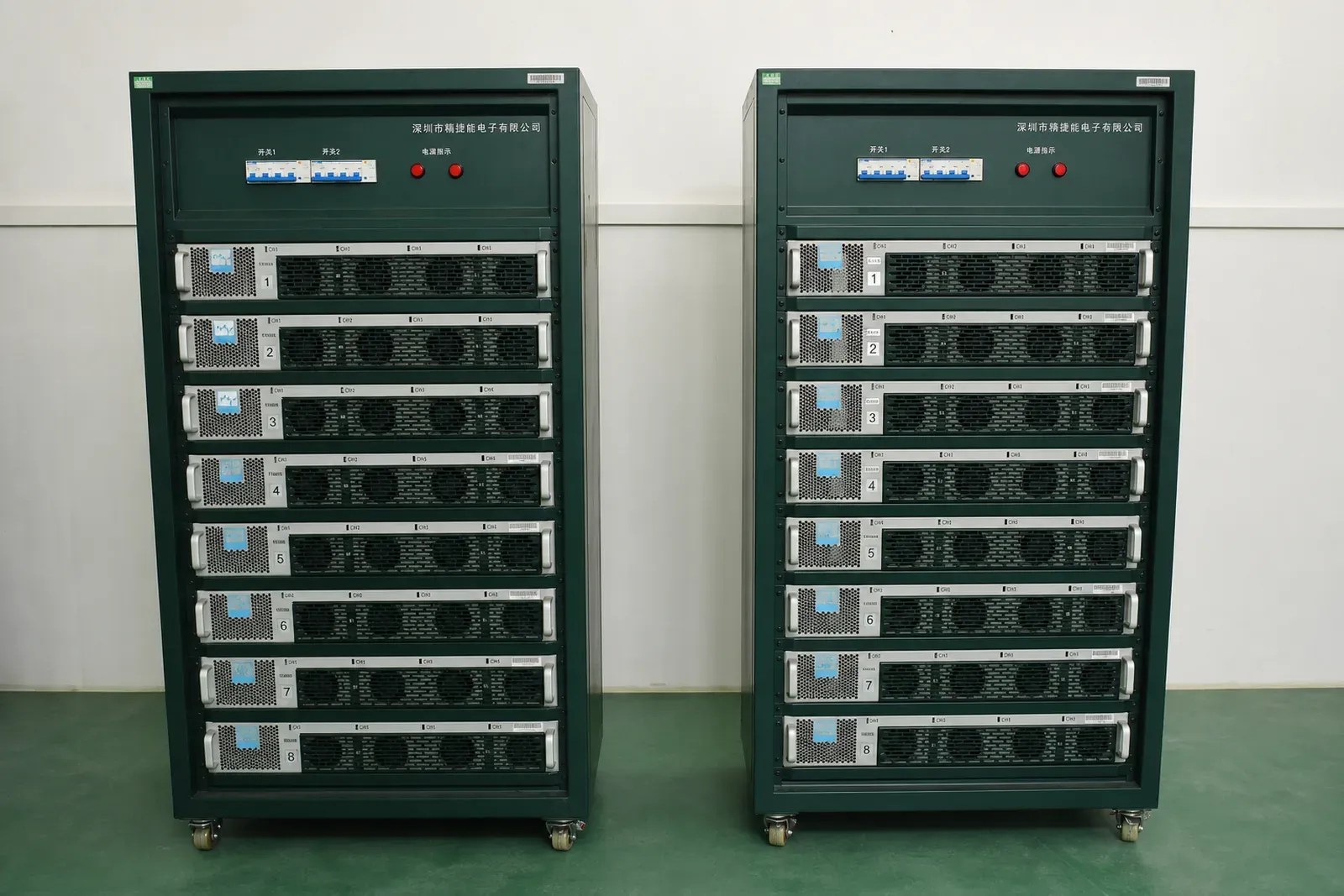
Automated multi-channel test cabinets conducting precision capacity grading and OCV/IR verification under controlled ambient conditions.
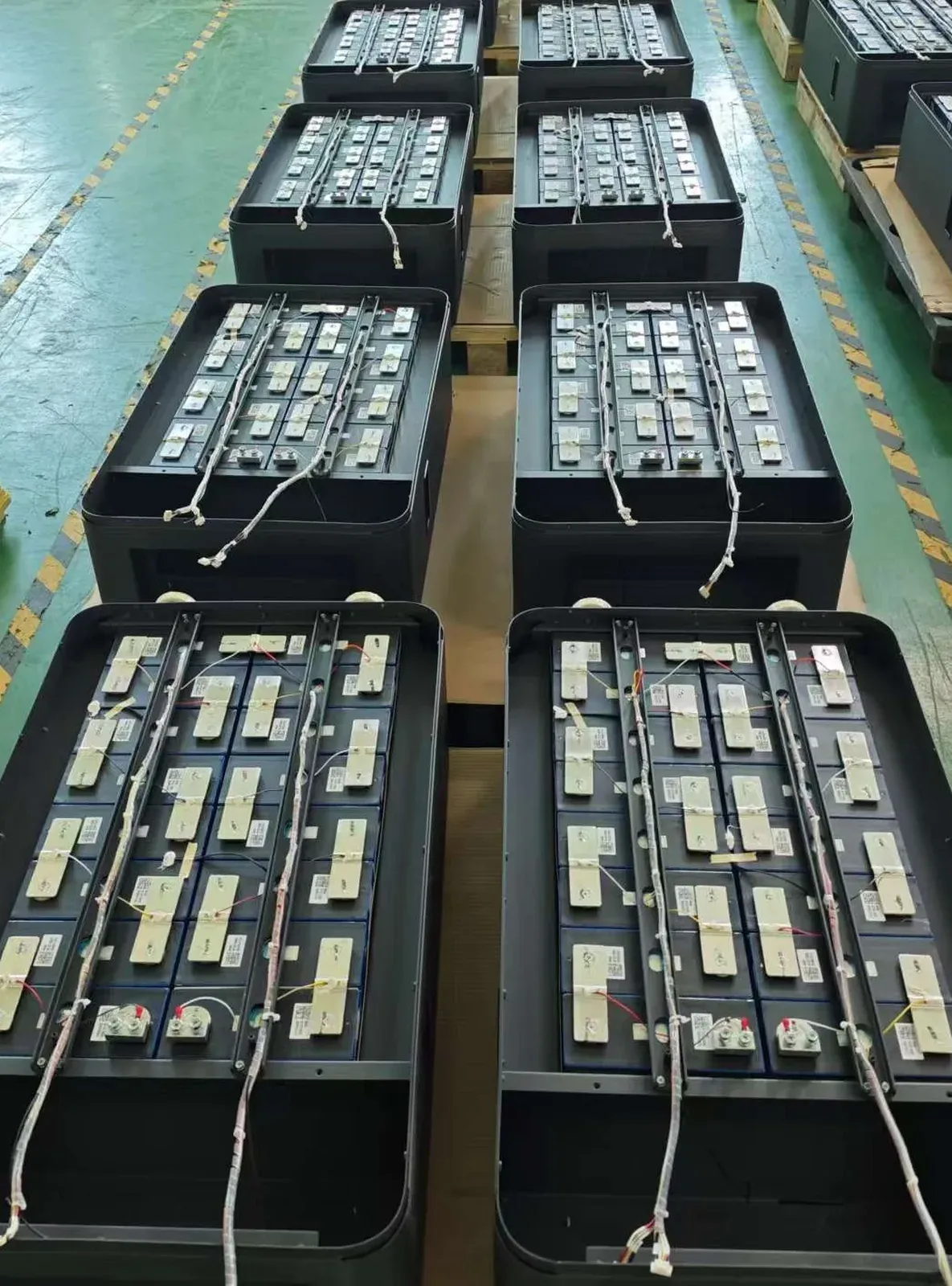
Matched cell groups maintain minimal voltage and resistance deltas across all series connections, preventing premature BMS cutoff.
1. The Multi-Parameter Screening Matrix: Why Capacity Alone Fails
A frequent error in amateur pack assembly is screening cells purely by rated amp-hour capacity. Two cells with identical 100Ah capacity can possess different internal impedances (for example, 0.42mΩ vs 0.65mΩ). Under high continuous or pulse discharge, the higher-resistance cell generates significantly more Joule heat (P = I²R), runs hotter, and reaches low-voltage cutoff sooner. The pack's usable capacity is dictated by the weakest cell—the 'barrel effect'. Genuinely reliable packs demand a four-point vector: Capacity + OCV + 1 kHz AC-IR + K-value self-discharge rate.
-
Capacity grouping ensures balanced discharge runtime across all series elements
-
1 kHz AC-IR matching balances dynamic load sharing across parallel bricks
-
OCV alignment ensures all cells start at an identical state-of-charge baseline
-
K-value screening eliminates cells with internal micro-shorts before assembly
2. Voltage Delta (ΔV) and 1 kHz AC-IR Matching Tolerances
In production, open-circuit voltage (OCV) reflects the electrochemical potential at rest, while 1 kHz AC internal resistance reflects the dynamic contact and ohmic impedance of the active materials and foil current collectors. AC-IR is measured using a 1 kHz sinusoidal alternating current, avoiding polarization interference that distorts DC-IR readings. Our factory applies strict engineering boundaries for matching lots.
-
Standard industrial ESS matching: Voltage delta ΔV ≤ 3.0mV within each crate
-
High-voltage series strings (>300V): Voltage delta ΔV ≤ 2.0mV for tighter stability
-
1 kHz AC-IR matching: Delta ΔIR ≤ 0.30mΩ for prismatic cells (>100Ah)
-
Cylindrical cell matching (18650/21700): AC-IR delta ΔIR ≤ 1.5mΩ within lot
3. K-Value Calculation & Self-Discharge Screening
Self-discharge rate is the definitive indicator of cell internal cleanliness. Microscopic metal burrs, dust particles, or separator micro-punctures do not always register as immediate dead shorts; instead, they manifest as abnormal voltage decay over time. The self-discharge rate K is expressed as K = (OCV1 - OCV2) / (t2 - t1) in mV/day. Cells exceeding the threshold are strictly eliminated from Tier-1 assembly.
-
Ambient aging: Staged at 25°C ± 2°C for 14 to 28 days between OCV checkpoints
-
High-temperature screening: Accelerated aging at 45°C for 7 to 10 days
-
Grade-A pass criteria: K-value ≤ 0.08 mV/day under ambient conditions
-
Abnormal rejection: Cells showing K > 0.15 mV/day discarded to prevent field fires
4. Automated Sorting Stations vs Manual Bench Probes
Manual multimeter probes introduce operator-dependent contact pressure and probe oxidation errors that can swing resistance readings by 0.2mΩ to 0.5mΩ—rendering precision grading invalid. Our sorting stations deploy pneumatically clamped four-wire Kelvin probe fixtures, ensuring repeatable, milligram-calibrated probe contact pressure on laser-cleaned terminal surfaces.
-
Four-wire Kelvin configuration eliminates test lead resistance
-
Pneumatic clamping delivers consistent contact resistance on bare poles
-
Integrated laser barcode reader links measurements directly to cell serial numbers
-
Automatic multi-bin chute sorts cells into distinct capacity-IR bins
5. Batch Test Certificates (COA) and Shipment Transparency
Transparency is the bedrock of industrial trust. Every matched lot of cells shipped from our facility is accompanied by a digital Certificate of Analysis (COA). Integrator engineering teams can cross-reference physical laser QR barcodes with row-by-row voltage, resistance, and capacity records in the spreadsheet, confirming tight Gaussian distributions before assembly begins.
-
Excel / CSV test report detailing 100% individual cell metrics
-
Gaussian distribution curves showing lot standard deviation (σ)
-
Incoming date, manufacturer lot code, and pre-sorting date stamped
-
Full traceability to UN38.3 packaging lot files and customs declarations
Engineering Baseline
Cell Sourcing & Matching Specification Checklist
Technical inputs recommended for engineering validation before final system architecture and quoting:
Nominal capacity & target C-rate duty cycle
Target pack series-parallel topology (e.g., 16S, 1P)
Allowable open-circuit voltage delta (e.g., ΔV ≤ 3mV)
Allowable 1 kHz AC-IR delta (e.g., ΔIR ≤ 0.3mΩ)
Resting duration & temperature prior to final OCV
Terminal type required (bare pole, welded stud, solder tab)
Batch COA digital data format requirements
UN38.3 test summary report requirement
Sample testing quantity for prototype validation
Annual volume and batch dispatch schedule
Related products and applications
Continue to the relevant product and engineering pages.
Grade-A Cell Sourcing & Matching Service
Direct access to verified Grade-A cells with tight tolerance sorting and tab welding.
Open Grade-A Cell Sourcing & Matching Service →Cell-Level Traceability & QR Code Scanning
How incoming laser barcode scanning prevents counterfeit and refurbished cells.
Open Cell-Level Traceability & QR Code Scanning →Cell vs Module vs Battery Pack Architecture
Understand delivery interfaces between bare cells, assembled modules, and turnkey packs.
Open Cell vs Module vs Battery Pack Architecture →FAQ
Lithium Cell Grading & Sorting Standards: OCV, AC-IR & K-Value Tolerances | Staricell
Why does AC-IR matter more than DC-IR during cell matching?
AC internal resistance at 1 kHz measures pure ohmic and electrochemical contact impedance without triggering electrochemical polarization. DC-IR requires high current pulses that cause local temperature rises and polarization overvoltage, introducing measurement artifacts. AC-IR provides a clean, repeatable signature for sorting, while DC-IR is evaluated for pack thermal sizing.
Can an active BMS balancing board compensate for poorly matched cells?
No. Standard active balancers transfer only 0.5A to 2.0A between cells. Under industrial loads of 50A to 200A, impedance differences cause dynamic voltage swings far exceeding what balancing circuits can correct. Relying on BMS balancing to fix mismatched cells generates persistent circuit heat and leads to premature low-voltage cutoffs.
What causes a high K-value in lithium cells?
Elevated K-value indicates internal micro-leakage currents. This is typically caused by micro-burrs on current collector foils, foreign conductive dust particles introduced during slitting, or separator pinholes. If built into a pack, such cells suffer severe self-discharge and can eventually develop internal short circuits.
How long should cells rest before precision voltage testing?
Freshly charged or discharged cells exhibit relaxation polarization. Cells must rest in a temperature-controlled room (25°C ± 2°C) for at least 72 hours before OCV matching, and for 14 to 28 days for accurate K-value self-discharge screening.