

UAV Battery 6S / 12S / 14S Selection
An engineering guide to selecting between 6S, 12S, and 14S UAV battery architectures based on propulsion system voltage limits, ESC thermal thresholds, hover-to-peak current profiles, and maximum takeoff weight (MTOW) constraints.
The series configuration (S-count) establishes the fundamental operating DC voltage window for UAV motors, ESCs, and power distribution boards. Increasing series voltage reduces I²R heating across wiring harnesses, but must be balanced against electronic voltage ratings, cell count weight penalties, and flight endurance targets.
Select 6S for compact, high-agility multirotors and fixed-wing UAVs operating under lower power budgets; choose 12S as the industry-standard baseline for commercial inspection and delivery drones balancing current draw and component availability; deploy 14S for heavy-lift agricultural and long-range payload platforms requiring minimized harness heating at high sustained wattage. Always align the voltage window with ESC ratings and propeller KV matching.
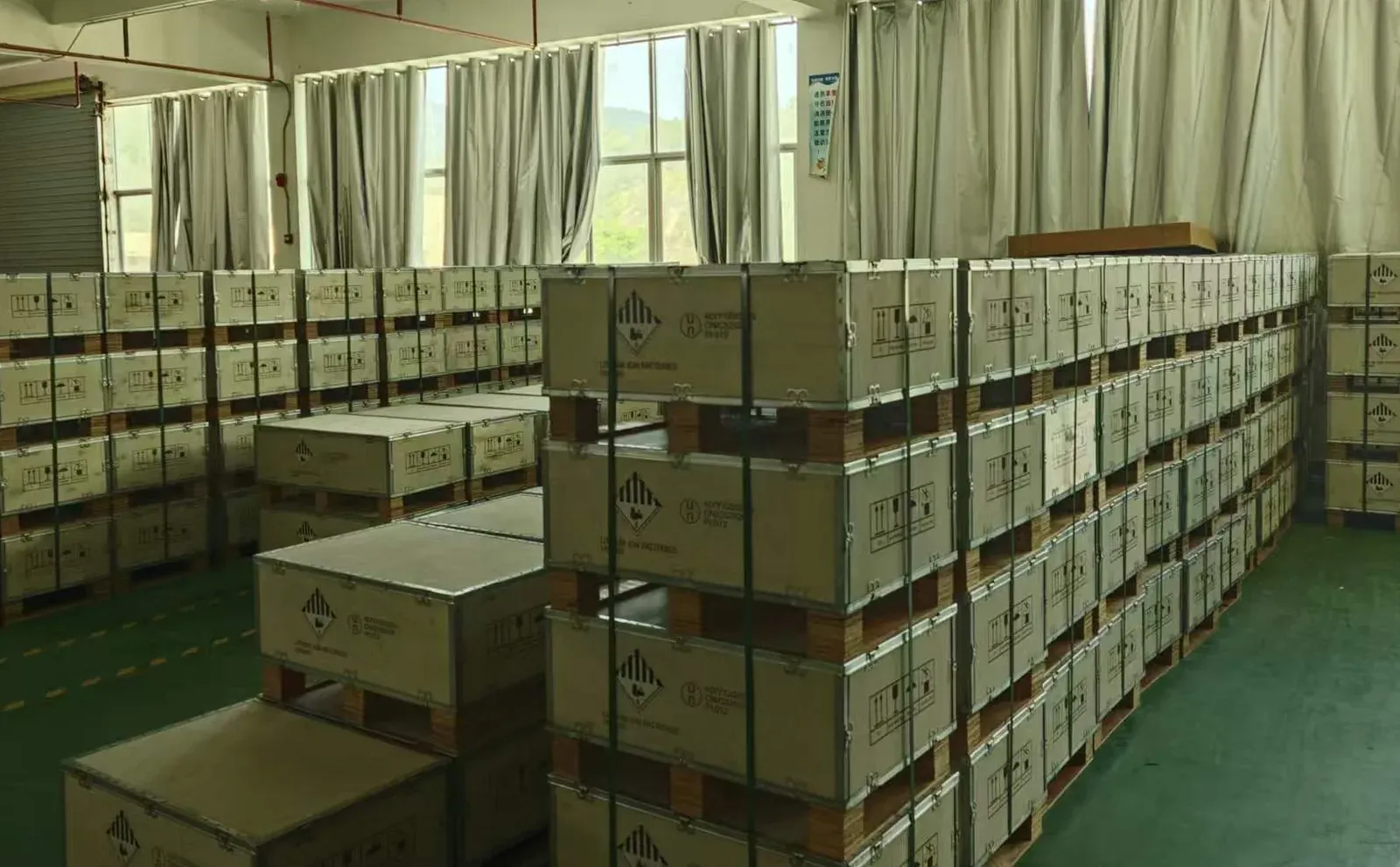
Finished heavy-payload drone packs packaged in rugged shock-resistant crates for global project delivery.
1. Start from motor and ESC voltage windows
Series count must keep pack voltage inside the ESC and motor approved window at full charge, mid-mission sag, and low-SOC cutoff.
-
ESC absolute maximum voltage
-
Motor KV and propeller pairing at the chosen window
-
Full-charge and cutoff voltages
-
Flight-controller power-input limits if shared
2. Current falls as series rises—for the same power
For a given mechanical power, a higher series count reduces current and can ease connector and harness heating—if the airframe can accept the voltage and any added pack mass.
-
Continuous cruise / hover current
-
Takeoff and maneuver peak with duration
-
Wire gauge and connector continuous rating
-
Acceptable voltage sag at pack terminals
3. Weight, connector, and bay constraints
A 12S or 14S pack may solve current heating while failing mass, center-of-gravity, or connector pinout constraints. Validate against bay drawings and MTOW before locking capacity.
-
Maximum pack mass and MTOW margin
-
Bay envelope and CG target
-
Connector family and keyed polarity
-
Balance lead and service access
4. Harmonizing voltage architecture with mission power profiles
Platform designations like 6S, 12S, or 14S define the electrical voltage baseline, but true mission endurance depends on usable energy, thermal equilibrium at pack terminals, and mass margins relative to hover power requirements.
-
Series = voltage window hypothesis
-
Current profile confirms harness and cell stress
-
Usable energy vs added mass decides endurance
-
Open product routes only after window + profile agree
5. RFQ handoff after series shortlist
Once a series window is shortlisted, provide mission logs or a current-versus-time table, pack mass cap, connector drawing, and charger method.
-
Chosen S-count and voltage window
-
Average and peak current table
-
Target flight time and reserve
-
Max pack weight and connector spec
Engineering Baseline
UAV series-selection checklist
Technical inputs recommended for engineering validation before final system architecture and quoting:
Motor and ESC voltage window
Candidate series count
Propeller and payload setup
Average current
Peak current and pulse duration
Minimum bus voltage
Maximum pack weight
Connector and harness length
Target flight time and reserve
Ambient temperature and cooling
Related products and applications
Continue to the relevant product and engineering pages.
UAV battery applications
Mission mapping for FPV, inspection, agricultural, logistics, and industrial UAV routes.
Open UAV battery applications →UAV battery product center
Compare high-rate, endurance, industrial, and compact routes after series shortlist.
Open UAV battery product center →Continuous vs peak current for UAV batteries
Build the current-versus-time profile that validates any series choice.
Open Continuous vs peak current for UAV batteries →UAV battery weight vs flight time
Check whether a higher-series pack’s mass still improves endurance.
Open UAV battery weight vs flight time →FAQ
UAV Battery 6S / 12S / 14S Selection | Staricell
Does a higher S-count always increase UAV flight time?
No. Series mainly sets voltage. Flight time depends on usable energy, average power, reserve, and whether added mass raises hover power enough to cancel the gain.
When should buyers open the continuous-vs-peak or weight guides?
After a series window is shortlisted: use continuous-vs-peak to validate current and connectors, then weight-vs-flight-time to check whether pack mass still serves the mission.
Can I choose 14S because a brochure lists it for industrial UAVs?
Not by itself. Confirm ESC and motor voltage limits, current profile, connector, and weight budget first.